


▽ +09.00Waterproofing · Roof & envelope
Roof waterproofing
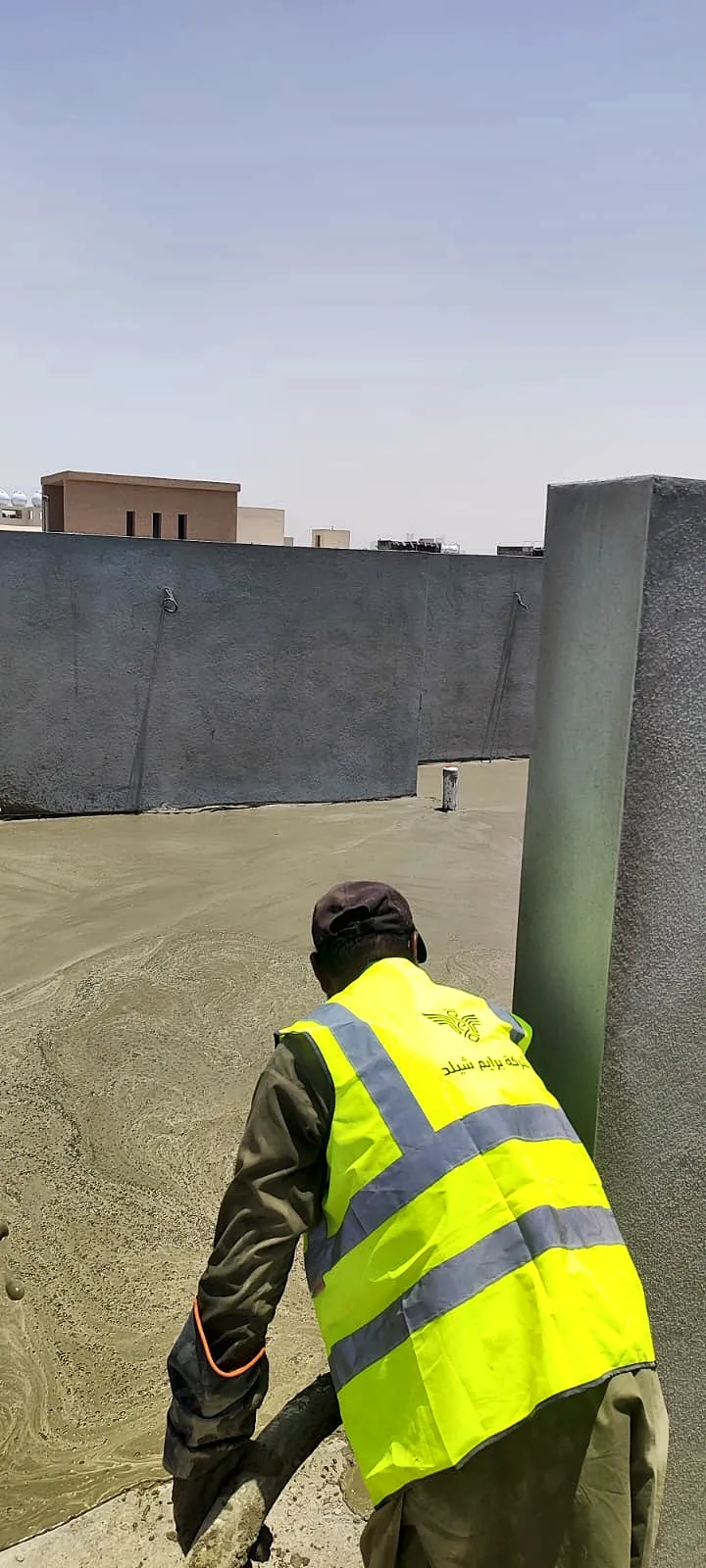
The roof takes the most sun, heat and rain. A roof that works starts with the screed to falls and ends with parapet and drain details and a flood test.

Engineering view
What is roof waterproofing?
A roof takes direct sun, wide day–night temperature swings and rain that is rare but heavy when it comes. A good membrane alone is not enough: a roof that works starts with a screed to falls towards the drains and is completed by the parapet, drain and penetration details and a protection layer that suits how the roof is used.
On Saudi roofs, waterproofing and thermal insulation are usually designed together: in an inverted roof the insulation boards sit above the membrane and shield it from heat, UV and movement.
88%
of portfolio projects include roofs
Prequalification 2026 — prevalence of systems across portfolio projects (percentages overlap)
Problems it solves
What goes wrong
Ponding
Wrong falls, or drains set above the membrane, leave water standing on the waterproofing.
Leaks at details
Most leaks start at parapets, drains, pipe penetrations and equipment bases — not in the middle of the roof.
Blistering and debonding
Moisture trapped below the membrane expands in the sun and lifts the layer off the substrate.
Ageing of exposed layers
An exposed membrane without a suitable top coat or protection ages faster under heat and UV.
Damage by later trades
AC bases and supports fixed through the waterproofing, or foot traffic on an unprotected layer after handover.
Diagnose by symptom
From the system’s documented advantages
Key benefits
The membrane is protected from UV, heat and damage
Insulation and waterproofing in one designed system
A usable roof surface
Documented advantages of Inverted roof system — every system also has limits, listed on its page.
Applications
Where it applies
- R.01
Concrete & flat roofs
The top roof, exposed or tiled, with thermal insulation and the screed to falls.
- R.02
Terraces & balconies
Used areas above occupied rooms: waterproofing under the tiles, or a clear coating over existing tiles.
- R.03
Podium decks
Slabs over car parks or shops, often with landscaping or traffic; see also parking and landscape.
- R.04
Parapets & upstands
Where the roof meets the wall: the waterproofing is turned up to the specified height, terminated and protected.
- R.05
Metal roofs & metal decks
Approved-applicator certificates from Awazel and Izomaks (waterproofing systems for metal decks of factories and warehouses) and AIM Industries (waterproofing systems for metal roofs) cover this work. One documented solution is sprayed polyurethane foam over the sheets, finished with a protective top coat.
Systems Spray PU foam
Evidence - R.06
Facades & building envelope
Protecting concrete facades from water and carbonation, thermal insulation of walls, and clear coatings for stone and tiles.
Systems Clear PUCementitiousSpray PU foamXPS & EPS boardsConcrete repairAnti-carbonation
Building condition
New or existing
New building
On a new roof the sequence is designed from the start: screed to falls, waterproofing and flood test, then insulation, protection and finish — with the details (upstands, drains, pipe sleeves) agreed with the structural works.
Existing building
On an existing roof we first find the source of the leak and check the bond and moisture of the old layers, then choose between a local repair, a compatible system over the existing layer, or full removal and a new system.
By technology
Available systems
- Sheet membranesBituminous membranes (SBS & APP)Modified-bitumen rolls torch-bonded with overlapping laps, for protected roofs, basements and foundations.
- Sheet membranesPVC membranesA synthetic sheet with hot-air welded seams, suited to large and exposed roofs.
- Sheet membranesEPDM membranesA flexible synthetic rubber in large sheets that copes with UV and movement, for exposed and garden roofs.
- Sheet membranesTPO membranesA single-ply thermoplastic polyolefin sheet with hot-air welded seams, for exposed roofs.
- Liquid-applied & liningsLiquid polyurethane waterproofingA liquid membrane that cures into a continuous, seamless rubbery layer, strong at details and penetrations.
- Liquid-applied & liningsPolyurea waterproofing (hot & cold)A fast-curing, tough polyurea layer, hot-sprayed with dedicated equipment or cold-applied.


All systems (13)
- Liquid-applied & liningsClear polyurethane coatingA clear polyurethane film that keeps surface water out of tiles and stone without changing how they look.
- Joint systemsExpansion joint systemsElastomeric sealants, tapes and cover profiles that let the building move while keeping the joint watertight.
- Thermal insulationSpray polyurethane foam insulationA closed-cell rigid foam sprayed in place to form continuous, joint-free thermal insulation.
- Thermal insulationXPS & EPS insulation boardsPolystyrene boards: XPS for inverted roofs, load and moisture; EPS for protected walls and ceilings.
- Thermal insulationInverted roof systemA roof build-up with the insulation above the waterproofing membrane, shielding it from heat and impact.
- Falls, drainage & protectionFoam-concrete screed to fallsA lightweight foam concrete laid to designed falls towards the drains, before the waterproofing.
- Falls, drainage & protectionProtection & drainage layersProtection boards, drainage and filter layers that shield the membrane in planters and buried walls.


How the system is chosen
| Situation | Suitable systems | Why |
|---|---|---|
| A roof to be tiled or used, needing thermal insulation | Inverted roof Bituminous membranes Liquid PU | The membrane under the boards is protected from heat and movement. |
| An exposed roof with many penetrations and services | Liquid PU Polyurea | A seamless liquid layer that wraps around details. |
| A large flat roof with few details | PVC membranes EPDM membranes | Single-ply sheets with seams that can be inspected. |
| A metal-sheet roof or deck | Spray PU foam | Insulation and a continuous layer over the sheets, then a protective top coat. |
| A terrace or balcony with tiles to be kept | Clear PU | Clear waterproofing over the tiles, without breaking them out. |
| A roof without proper falls to the drains | Screed to falls | A lightweight screed to falls before any waterproofing. |
| Planters and roof gardens | Protection & drainage Planters & landscape | Drainage and protection layers over the membrane; see the landscape page. |
A starting point only: the final system follows the inspection, the approved specification and the product TDS.
Layers
System build-up
System build-up8 layers
Inverted roof system
Select a layer to see what it does.
Tiles or final finish
Mechanical protection and the walking surface.
Bedding mortar
Levels and fixes the tiles.
Geotextile separation layer
Prevents abrasion and keeps the mortar off the boards.
XPS insulation boards
Above the membrane: they insulate and shield it from heat and impact.
Waterproofing membraneCore layer
The core of the protection: bituminous, PVC or liquid PU, as specified.
Primer
Full bond between membrane and substrate.
Foam-concrete screed to falls
Directs water to the drains.
Concrete slab
The structural element.
A typical build-up for this application, top to bottom.
System page: how it works and its limitsBrand-neutral
Manufacturers & approvals
- Bitumat / MAPEIApproved applicatorCertificate
- Fosroc (Saint-Gobain)Approved applicatorCertificate
- AwazelApproved applicatorCertificate
- DermabitApproved applicatorCertificate
- AIM IndustriesApproved applicator · Sister companyCertificate
- IzomaksApproved applicatorCertificate
- Gulf Panels (Rock Board)Certified distributorCertificate
We start from the engineering of the system, then the product. Manufacturers appear here only with their documented relationship; this does not imply a commercial partnership.
Before work starts
Surface preparation
- Falls checked towards every drain before work starts — no standing water.
- A clean, dry, sound substrate: laitance, oil and loose material removed.
- Corners coved with fillets where the system requires it.
- Drains, pipe sleeves and equipment bases fixed before the waterproofing, not after.
- Moisture measured before liquid systems; primer as the product TDS requires.
Sequence
Installation process
Survey
Levels, drains, penetrations and the state of any existing layers.
Screed to falls
Foam concrete or mortar, as the specification sets.
Details first
Drains, parapets, penetrations and corners reinforced before the main layer.
Main waterproofing layer
Turned up the parapet to the specified height and terminated.
Flood test
Before the waterproofing is covered, with the result recorded.
Insulation, protection, finish
Boards, separation and protection layers, then tiles or gravel.
Inspection & testing
QA/QC
- Falls and ponding checked by level survey or with water.
- Thickness or coverage of liquid systems checked against the TDS.
- Every lap and seam of sheet membranes inspected.
- Adhesion tested (pull-off to ASTM D4541) where the specification calls for it.
- Flood test before the protection layer, recorded in the quality file.
What we avoid
Common failures
Membrane stopped at the slab edge
Instead of being turned up the parapet, terminated and protected.
Drains above the membrane level
Or not clamped into the membrane, so water enters around the drain.
Liquid membrane on a damp substrate
Leads to bubbles and debonding within weeks.
Fixings after handover
AC bases or supports fixed through the waterproofing without a detail.
Covered without a test
Any defect found later means breaking out the tiles.
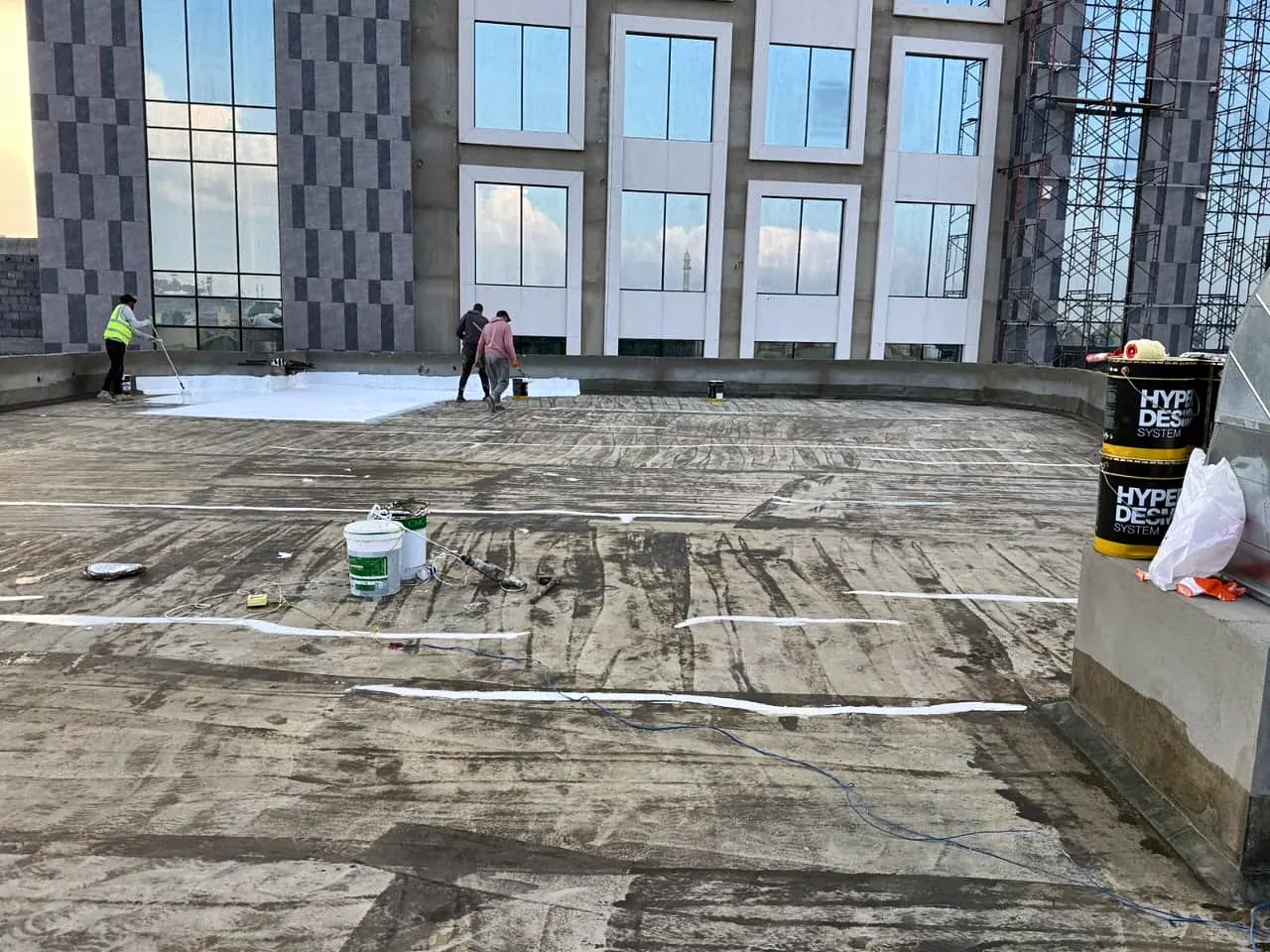
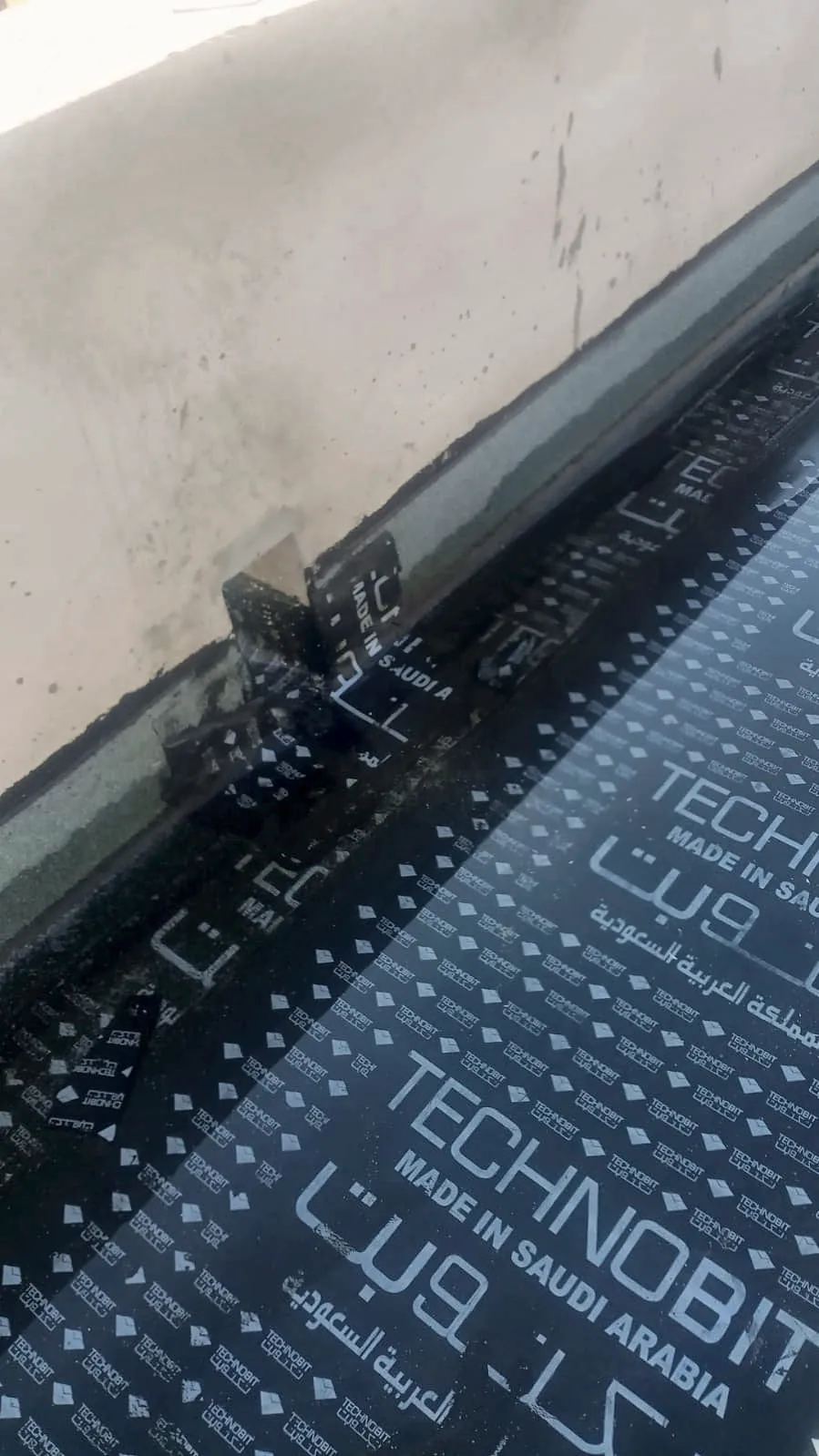
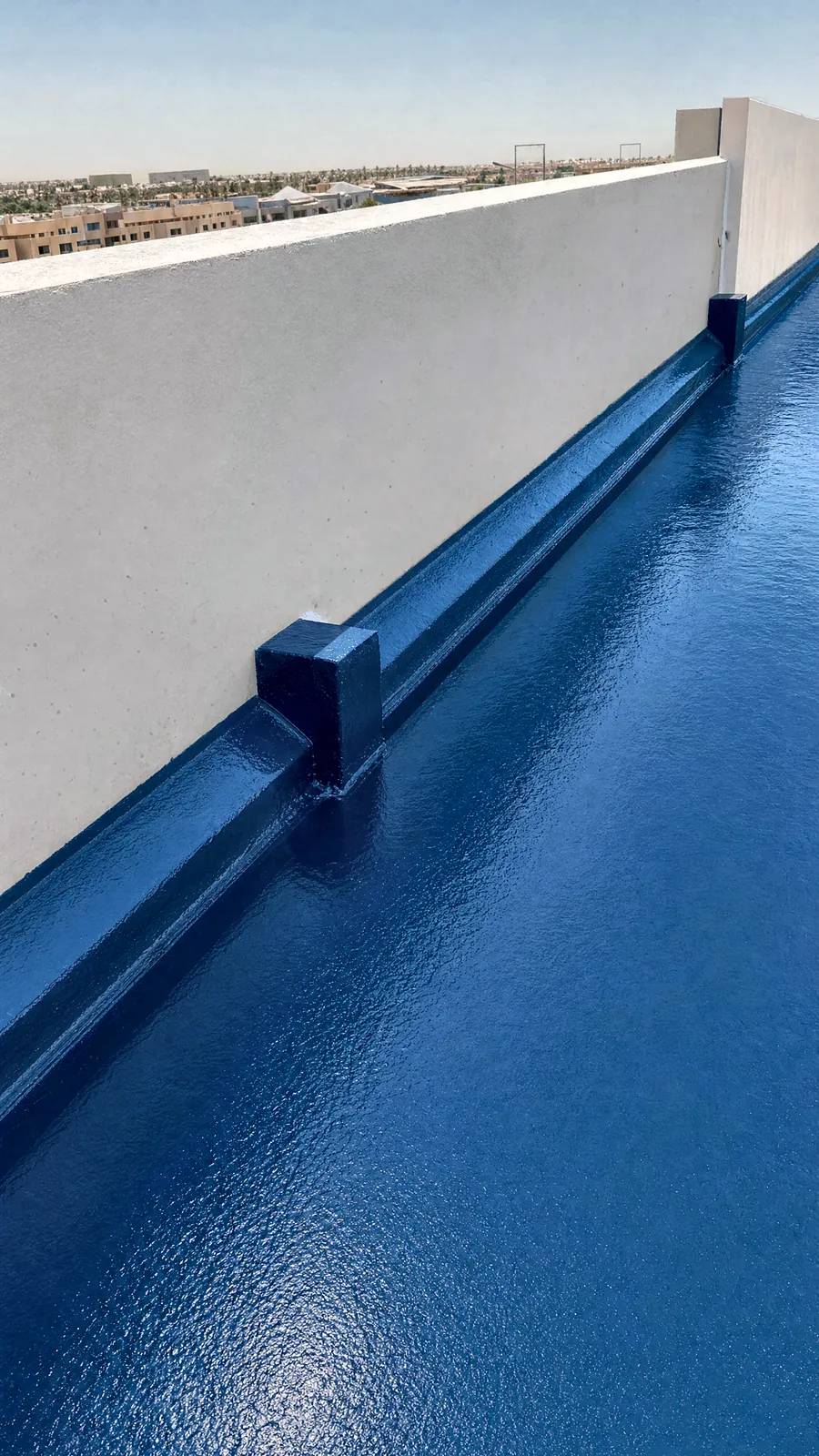
Real photos from our projects
On site
Executed references
From our projects

Riyadh International Convention & Exhibition Center
Riyadh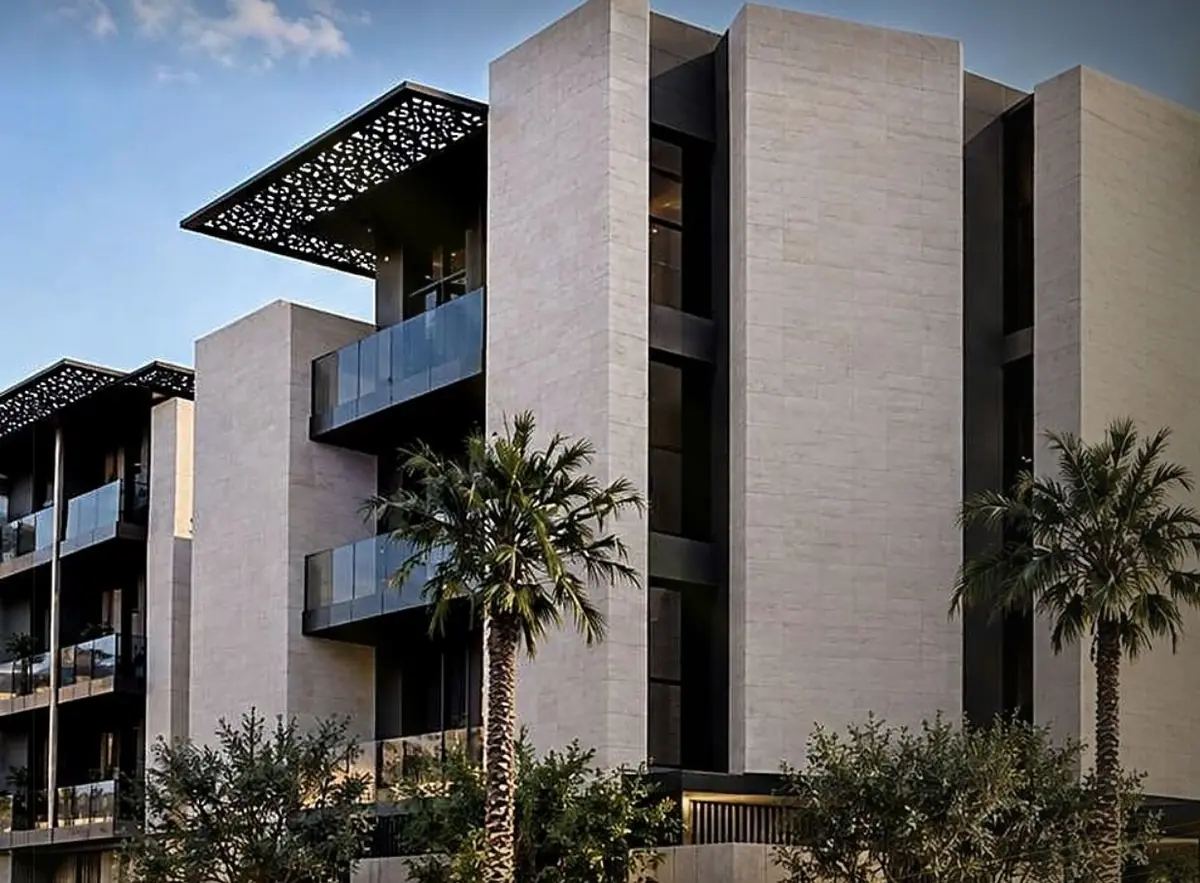 Residential development
Dyari Signature
Al-Munsiyah, Riyadh Hotel & resort
InterContinental Abha
Abha, Asir Region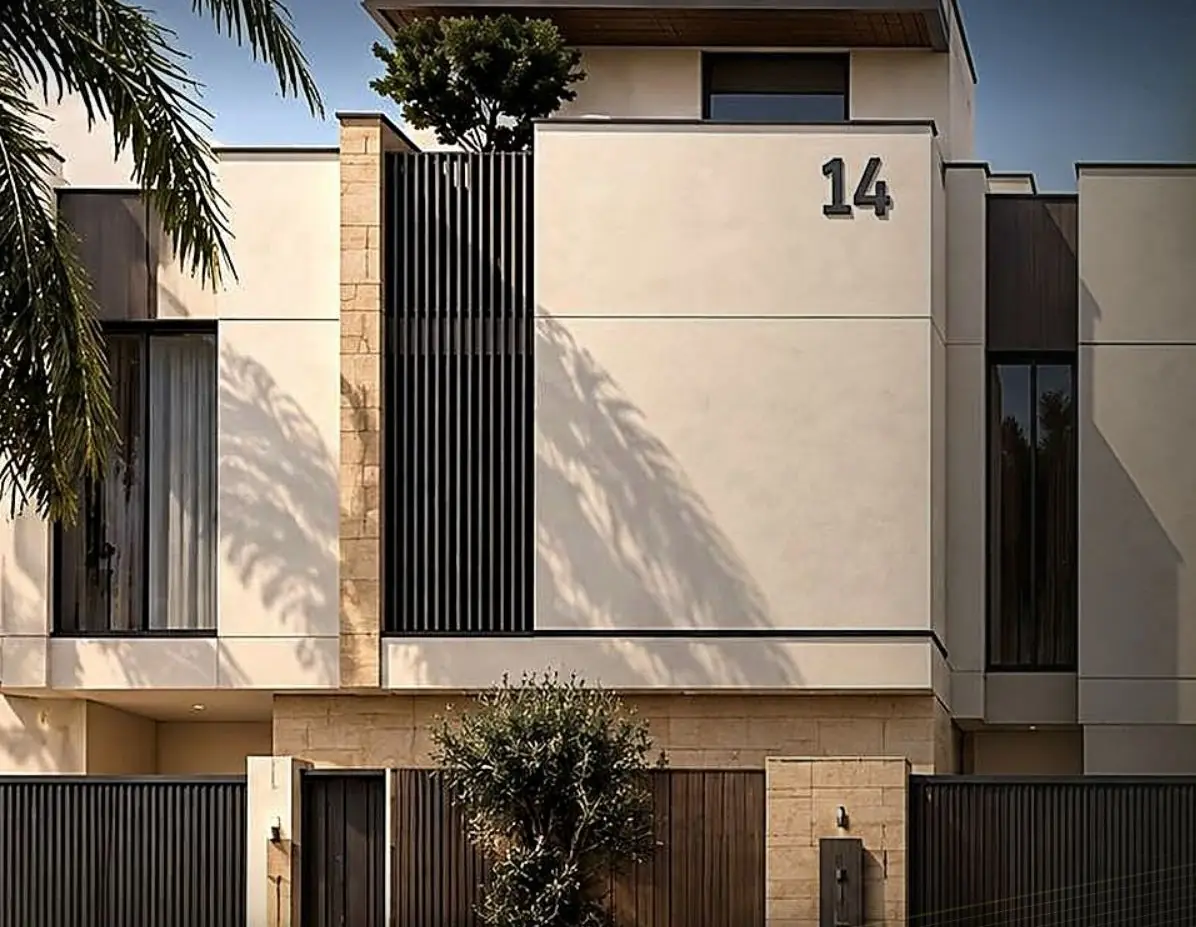
Al-Safa Hills
Al-Safa, Riyadh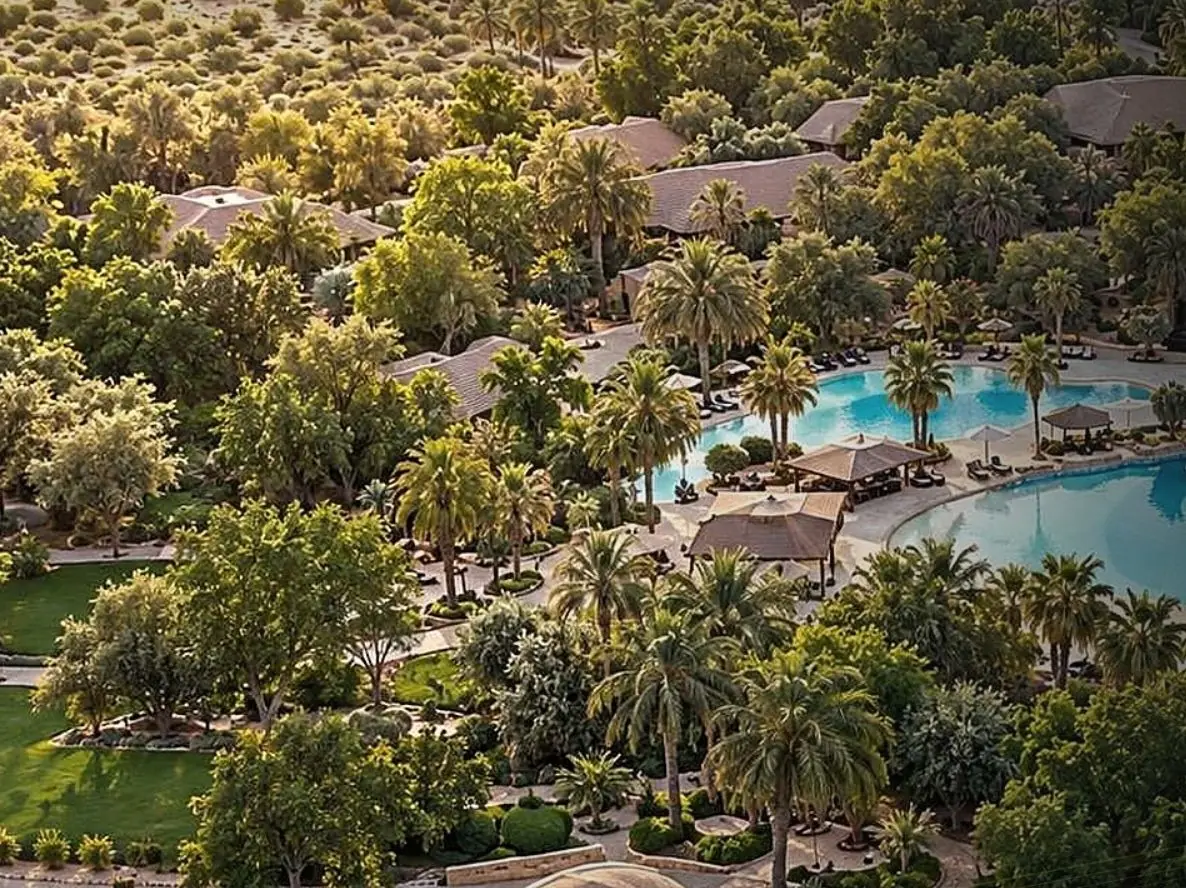 Five-star resort
NOFA Radisson Collection
Al-Muzahmiyah, Riyadh Region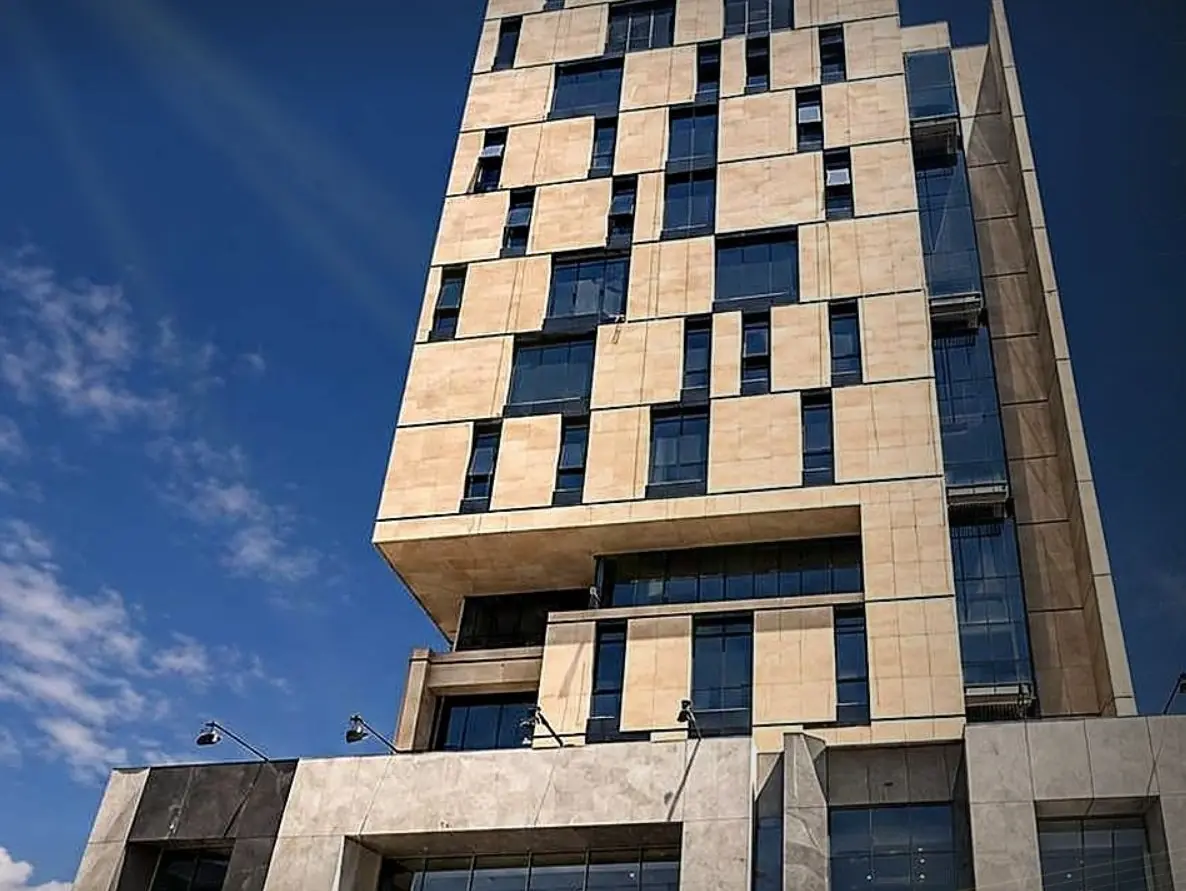 Commercial tower
Al-Majed Tower
King Salman Road, Al-Qairawan, Riyadh

Go deeper
Technical references
Before you ask
Questions
Which system suits my roof?
It depends on the roof’s type and condition, whether it stays exposed or is tiled over, and on its penetrations and falls. After an inspection we recommend a specific system — liquid PU, PVC or EPDM membranes, bituminous rolls, or an inverted roof with thermal insulation.
Can waterproofing and thermal insulation be done together?
Yes — and on most roofs it is the better option. In an inverted roof the insulation boards sit on top of the membrane and protect it, and the whole build-up is installed from the screed to falls to the protection layer.
Can a leak in an existing roof be fixed without removing the tiles?
Sometimes. If the tiles are sound, a clear polyurethane coating can go over them; if the leak comes from the membrane itself or from drains and parapets, the area has to be opened and repaired. The inspection decides.
How much does roof waterproofing cost?
There is no fixed price per square metre: the cost depends on the system (membrane rolls, liquid-applied, or an inverted roof with insulation), the roof’s condition, preparation and falls, the area and details, and the specification. Send the area and photos or drawings for an itemised quotation after review or inspection.
Can new waterproofing go over the old layer?
Sometimes. If the old layer is bonded, sound and compatible with the new system, the new one can go over it after cleaning and the right primer. If it is loose or has water trapped under it, the damaged parts come off first; an adhesion and compatibility check decides.
When does a roof need re-waterproofing?
When stains or leaks appear on the ceilings, the membrane cracks or blisters, water ponds after rain, or the parapet, drain and penetration details are damaged — and before adding tiles or insulation over a damaged old layer.
Why does water pond on the roof after rain?
Usually because the falls towards the drains are not enough, or the drains are blocked or set above the waterproofing level. Ponding ages the membrane faster and loads the details, so the screed to falls and the drains are corrected before re-waterproofing.
Can a roof be waterproofed in summer?
Yes, with the timing controlled: each product’s data sheet sets limits for surface and air temperature and humidity, so work is usually done early in the morning or in the evening, the roof is kept free of dust and wind, and drying times between coats are respected.
Next step
A leaking roof, or a new one?
Send photos or drawings of the roof for a detailed offer, or ask for a technical review to find the source of a leak.