


▽ +09.00Concrete repair & protection
Concrete repair with repair mortars
Breaking out damaged concrete, treating the reinforcement and rebuilding the section with a suitable repair mortar.

What it is and how it works
Concrete repair starts with the cause of the damage: reinforcement corrosion, carbonation, chlorides, overload or construction defects. Damaged concrete is removed back to sound material, the steel is cleaned and protected, and the section is rebuilt with a suitable repair mortar.
Repair principles and materials are commonly selected under BS EN 1504 (products and systems for the protection and repair of concrete structures), and a protective coating usually follows to slow recurrence.
- Family
- Concrete repair & protection
- Used in
- Basement & foundation waterproofingWater tank waterproofingParking deck waterproofing & protectionFacades
- Build-up
- 5 layers
Where it fits — and where it does not
A good fit for
- Spalling concrete with exposed or corroding steel
- Columns, beams, slabs and walls in existing buildings
- Basement soffits, car parks and tanks
- Honeycombing and construction defects
Not a fit, or needs a check
- Structural deficiency that needs strengthening: a structural engineer designs it
- Patching without removing the cause or cleaning the steel
- A mortar class that does not suit the element’s loads
Advantages and limitations
Every system has strengths and limits; the right choice starts from the site conditions.
Advantages
- Restores the section, the cover and the protection of the steel
- Localised work with little disruption
- Followed by protection that slows recurrence
Limitations
- Hidden damage may be larger than it looks
- Propping may be needed for large break-outs
- Success depends on preparation and curing
System build-up
Top to bottom. Final thicknesses and materials follow the approved specification and the product TDS.
System build-up5 layers
Concrete repair with repair mortars
Select a layer to see what it does.
Protective coating
An anti-carbonation or chemical-resistant coat, where the exposure calls for it.
As specified
Repair mortarCore layer
Built up in layers back to the original profile; its class depends on the structural role of the element.
Bonding coat
Where the repair system requires it, or pre-wetting for cementitious mortars.
Reinforcement protection
The steel is cleaned of rust and coated against corrosion.
Sound concrete
Damaged concrete is broken out to sound material and behind corroded bars.
Preparation and application
Surface preparation
- Condition survey: hammer tapping, cover readings, carbonation and chloride tests where needed
- Repair areas marked out and saw-cut at the edges
- Breaking out behind corroded bars
- Steel cleaned to bright metal; bars that lost section replaced as the engineer decides
Application sequence
Break-out
Damaged concrete removed back to sound material.
Steel treatment
Cleaning and an anti-corrosion coat.
Bonding
A bonding primer or pre-wetting, as the mortar requires.
Rebuilding
Repair mortar applied in layers, compacted and finished.
Curing
Protected from sun and wind.
Protection
An anti-carbonation or protective coating over the element.
General educational content; final values and requirements follow the manufacturer’s TDS and the approved project specification.
Checks and common mistakes
Quality checks
- Survey and repair map recorded
- Steel cleanliness inspected before the primer
- Hammer test after cure: no hollow sound
- Pull-off adhesion where specified
Common mistakes
- Feathered edges instead of saw-cut edges
- Rust left behind the bar
- Mortar applied too thick in one layer
- No curing in hot weather
Common questions
Is a repair mortar the same as plaster?
No: repair mortars are designed for bond, strength and low shrinkage in structural repairs.
Do repaired areas need a coating?
Usually yes: a protective coating slows carbonation and chloride ingress over the whole element.
When is repair mortar enough, and when is structural strengthening needed?
Repair mortar rebuilds the damaged section and protects the steel; if the element has lost capacity or faces new loads, a structural assessment and strengthening to the approved design are needed.
Is the element coated after the repair?
A protective anti-carbonation coating over the whole element is usually advised after the repair, because the surrounding concrete faces the same exposure.
Manufacturers
Our documented relationship with each manufacturer; the specification sets the product.
- Weber (Saint-Gobain)Approved applicator · Materials we have used
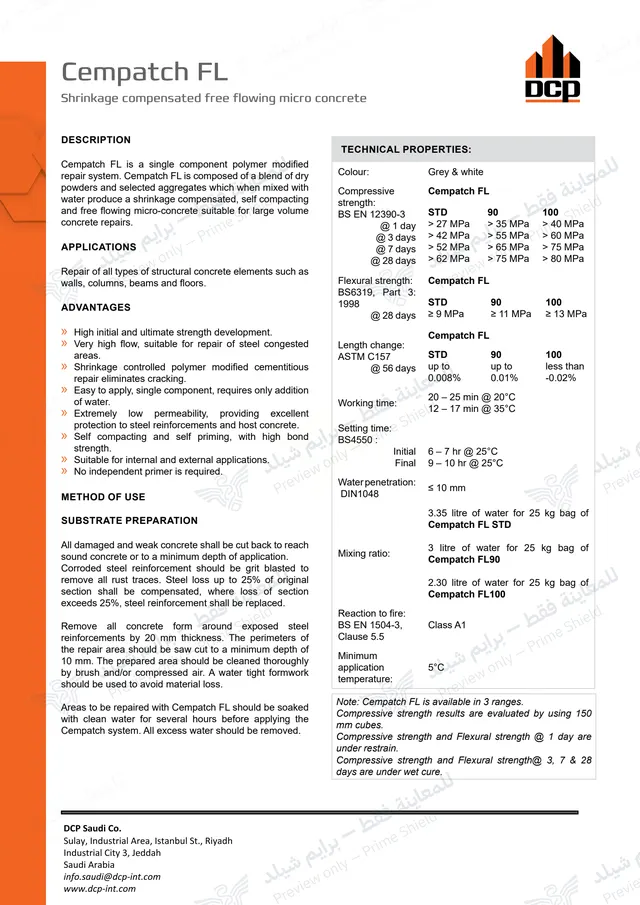
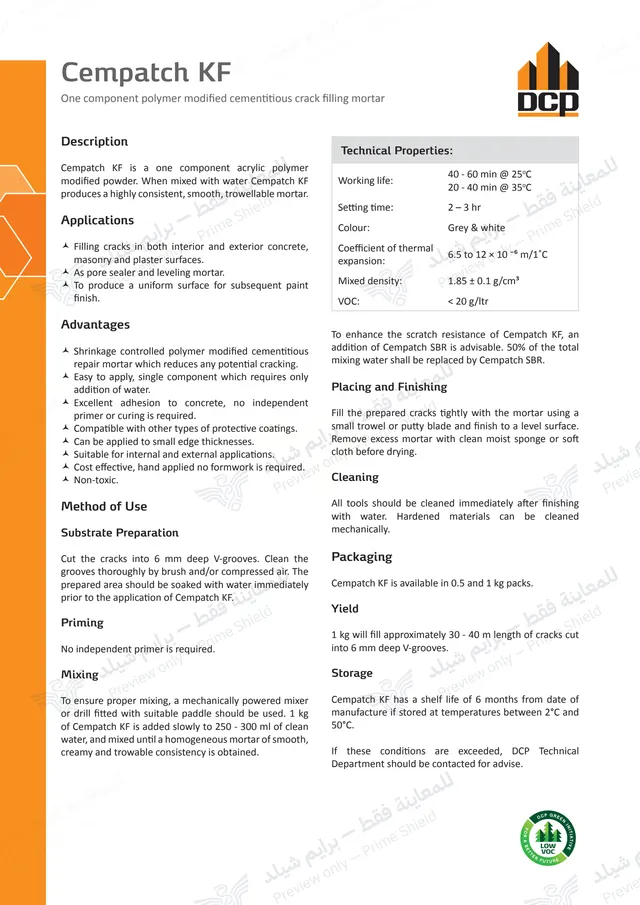
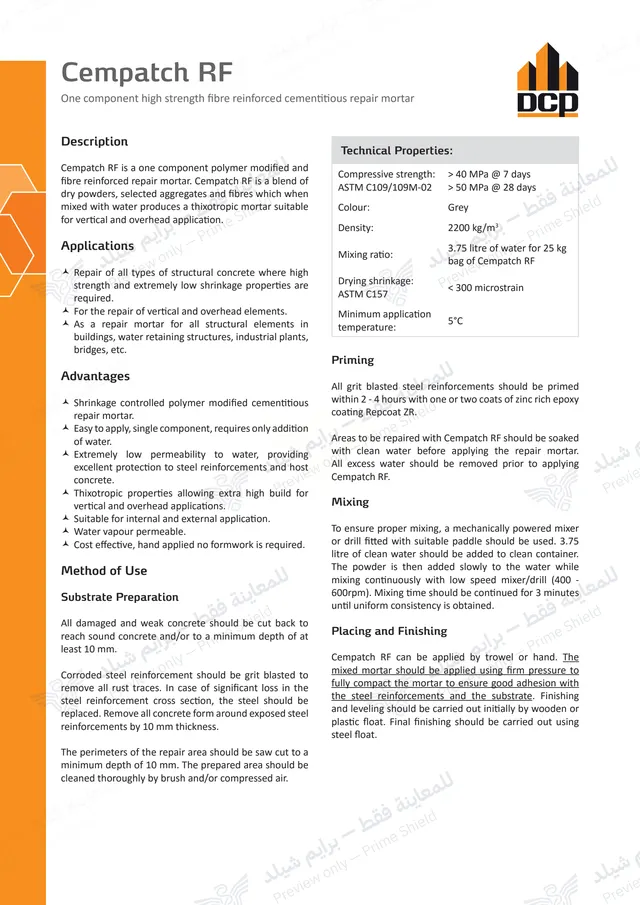
- DCP SaudiCertified applicator
Next step
Considering this system for your project?
Send drawings or site photos; our engineers review the case and propose the right specification.