


▽ +09.00Liquid-applied & linings
Polyurea waterproofing (hot & cold)
A fast-curing, tough polyurea layer, hot-sprayed with dedicated equipment or cold-applied.


What it is and how it works
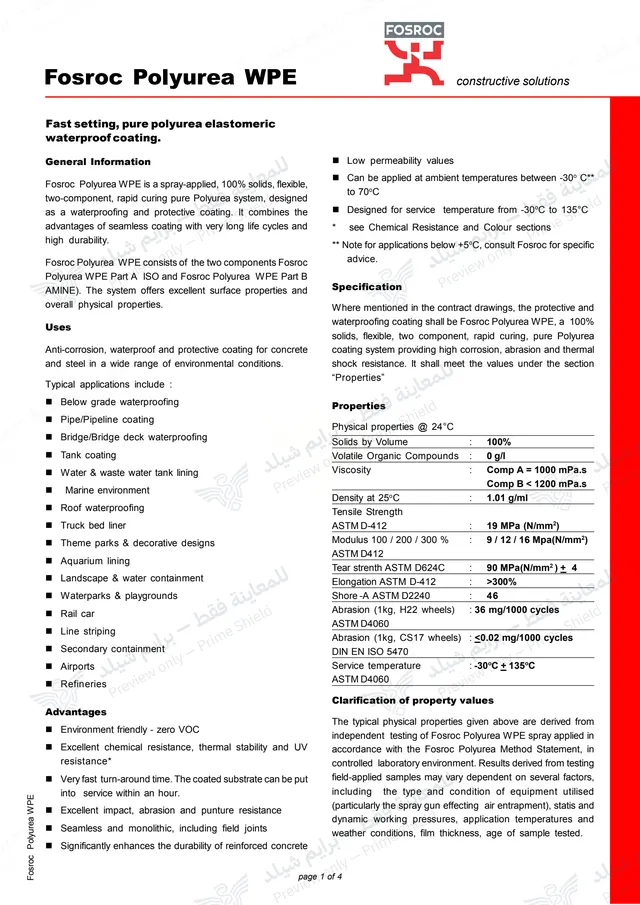
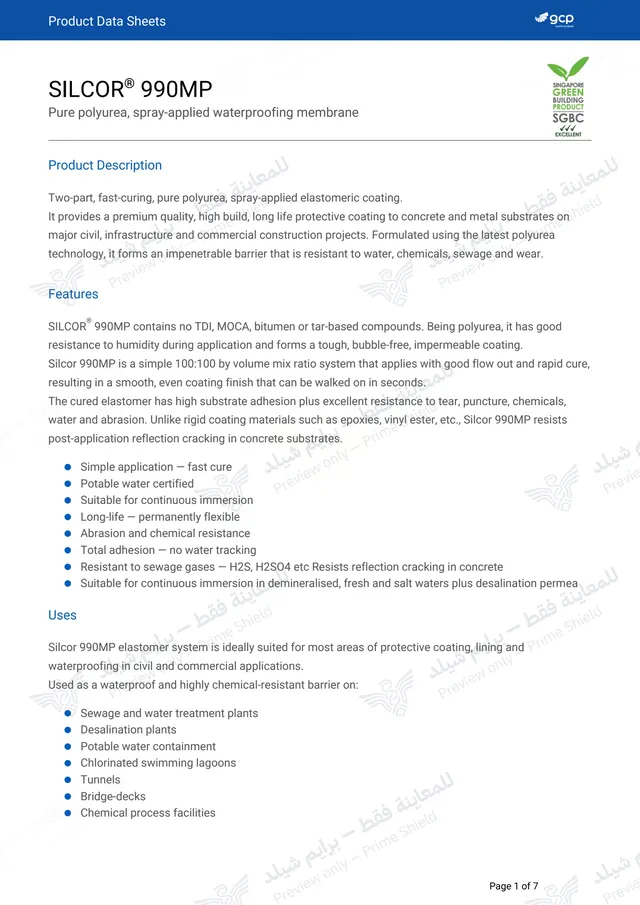
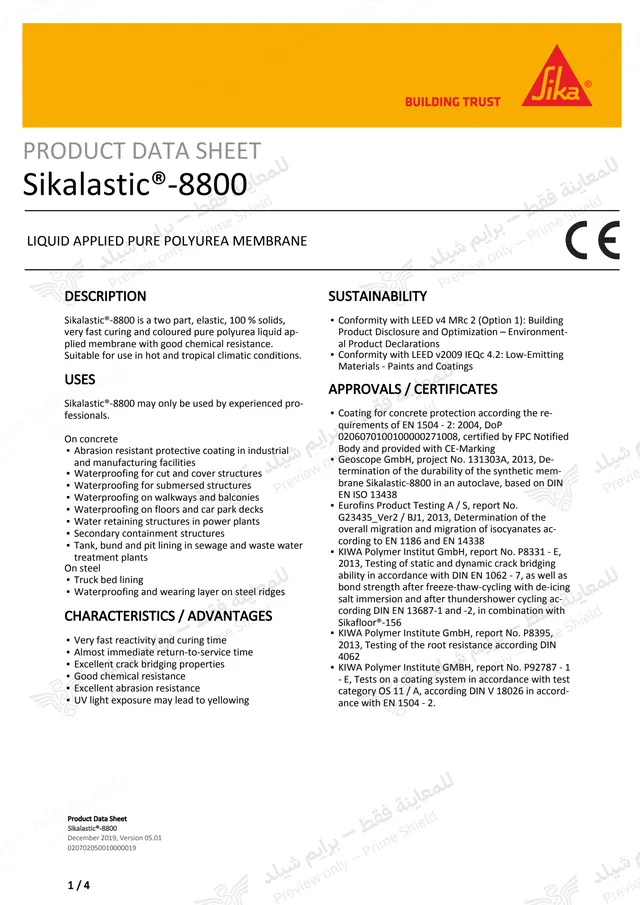
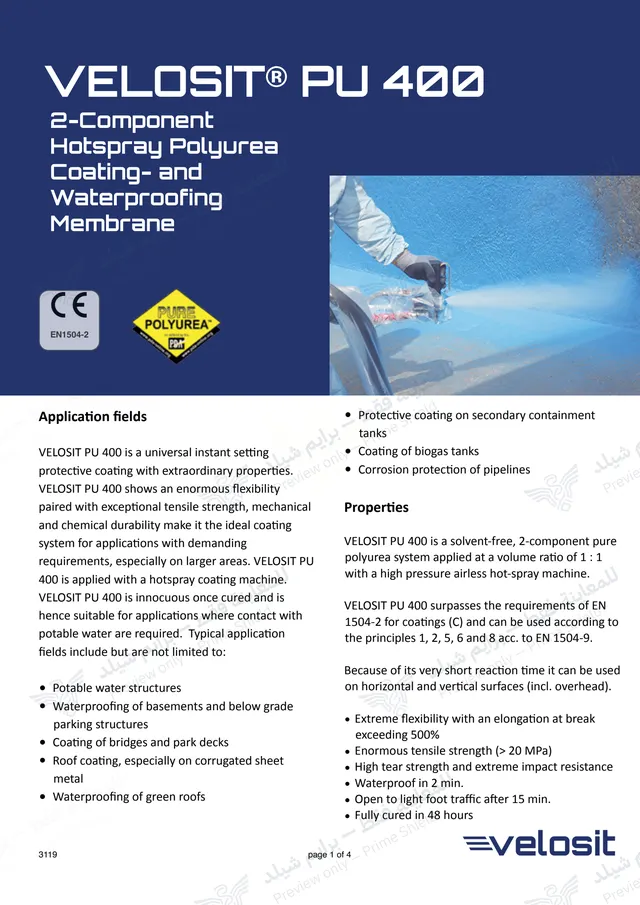
Polyurea is a two-component material that reacts within seconds to minutes into a tough, flexible, continuous membrane. Hot polyurea is sprayed with heated, high-pressure plural-component equipment; cold-applied grades cure more slowly and need no such rig.
Fast cure allows an early return to service and full thickness in one pass, but it makes the primer, the preparation and the equipment settings even more critical: there is no time to level after spraying.
- Family
- Liquid-applied & linings
- Used in
- Roof waterproofingWater tank waterproofingPool & water-feature waterproofingParking deck waterproofing & protection
- Build-up
- 4 layers
Where it fits — and where it does not
A good fit for
- Large roofs and industrial facilities
- Tanks and basins where the product is approved for the stored liquid
- Parking decks, within a wearing system
- Pools and water features where specified
- Fast-track works that need an early return to service
Not a fit, or needs a check
- Unprepared or damp substrates: pinholes and delamination
- Very small areas that do not justify a hot-spray rig: a cold grade or PU instead
- Sun exposure without an aliphatic top coat where the system needs one: aromatic polyurea discolours
Advantages and limitations
Every system has strengths and limits; the right choice starts from the site conditions.
Advantages
- Very fast cure and early use
- Tough: abrasion and impact resistant
- Seamless over large areas and complex shapes
- Chemical resistance, depending on the product
Limitations
- Hot spray needs specialised rigs and trained operators
- Very sensitive to primer, moisture and surface profile
- Overspray must be controlled on site
- Aromatic grades need a UV-stable top coat
System build-up
Top to bottom. Final thicknesses and materials follow the approved specification and the product TDS.
System build-up4 layers
Polyurea waterproofing (hot & cold)
Select a layer to see what it does.
Aliphatic top coat
Keeps the colour and resists UV where the surface stays exposed.
Exposed surfaces
Polyurea membraneCore layer
Hot-sprayed with plural-component equipment or cold-applied, it cures fast into a continuous, seamless layer.
Primer
Essential for adhesion; chosen for the substrate (concrete or steel).
Prepared substrate
Mechanically profiled concrete or cleaned steel, dry and free of contaminants.
Preparation and application
Surface preparation
- Mechanical preparation by grinding or shot-blasting to open the surface
- Moisture and dew-point checks
- Repairs, fillets and joint treatment before priming
- Adjacent surfaces masked against overspray
Application sequence
Primer
A primer suited to the substrate and its moisture, within its overcoat window.
Equipment check
Temperatures, pressures and mix ratio verified on a test panel (hot spray).
Details
Corners, upstands and penetrations sprayed or brushed first.
Membrane
Sprayed or applied in crossing passes to the specified thickness.
Top coat
An aliphatic top coat or wearing layer where the system requires.
General educational content; final values and requirements follow the manufacturer’s TDS and the approved project specification.
Checks and common mistakes
Quality checks
- Test panel and mix-ratio checks (hot spray)
- Thickness readings on a grid
- Continuity (holiday) testing of tank linings (ASTM D4787)
- Pull-off adhesion where specified
Common mistakes
- Spraying onto a damp or unprimed surface
- Wrong mix ratio or temperatures: a soft or brittle film
- Ignoring the primer’s overcoat window
- Leaving aromatic polyurea in the sun without a top coat
Common questions
Hot or cold polyurea?
Hot spray suits large areas and fast-track works; cold-applied grades suit smaller areas and details. The specification and the site decide.
Is polyurea suitable for drinking-water tanks?
Only grades the manufacturer has approved for potable water, applied as approved.
PU or polyurea?
Polyurea cures faster and is tougher; liquid PU is more forgiving to apply and suits small areas.
Where is polyurea used?
Where speed and toughness matter: roofs and podiums that must return to service quickly, car parks, tanks (with grades approved for drinking water) and protection of concrete and steel. Hot spraying needs dedicated equipment and careful surface preparation.
Next step
Considering this system for your project?
Send drawings or site photos; our engineers review the case and propose the right specification.