


▽ PVCSheet membranes
PVC membranes
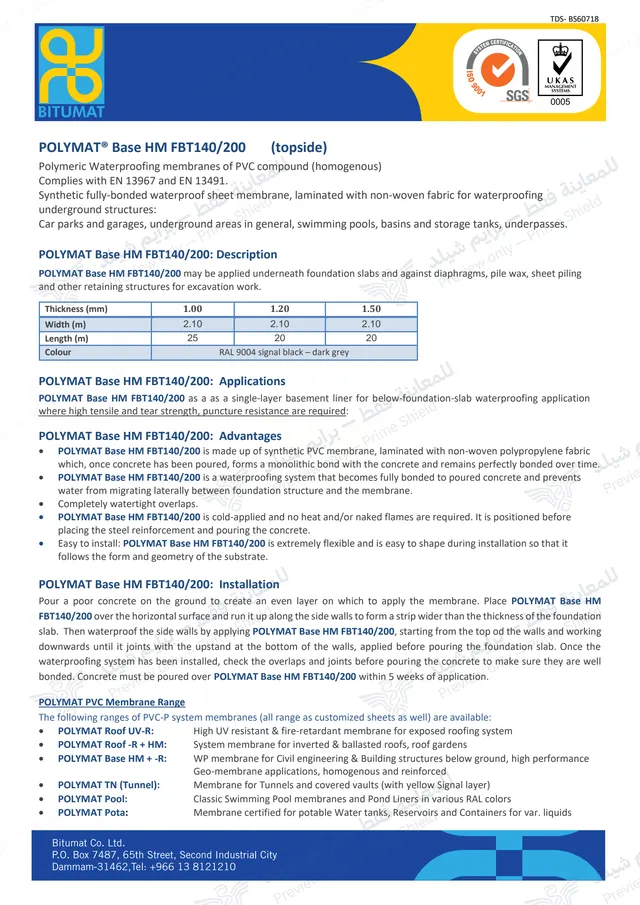
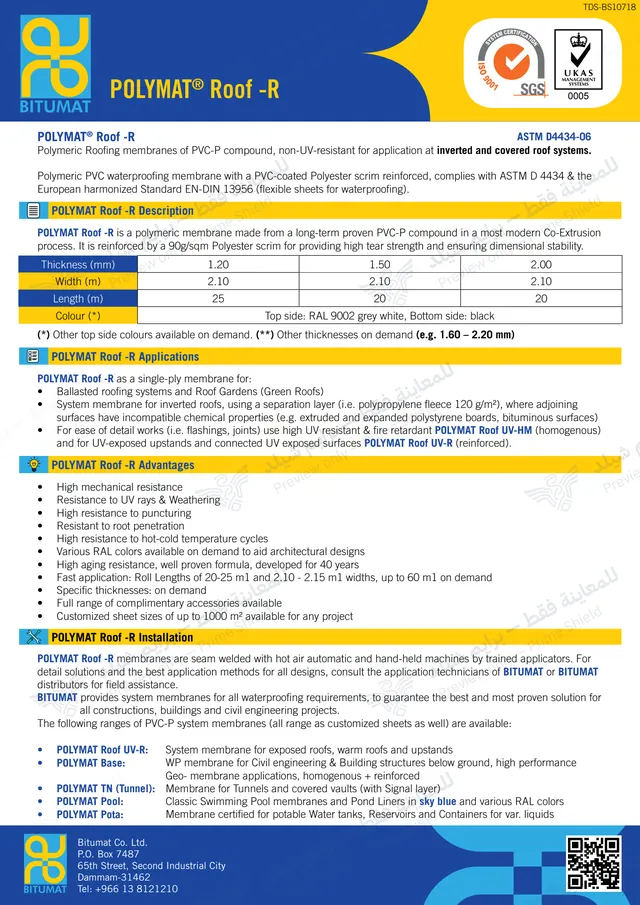
A synthetic sheet with hot-air welded seams, suited to large and exposed roofs.


What it is and how it works
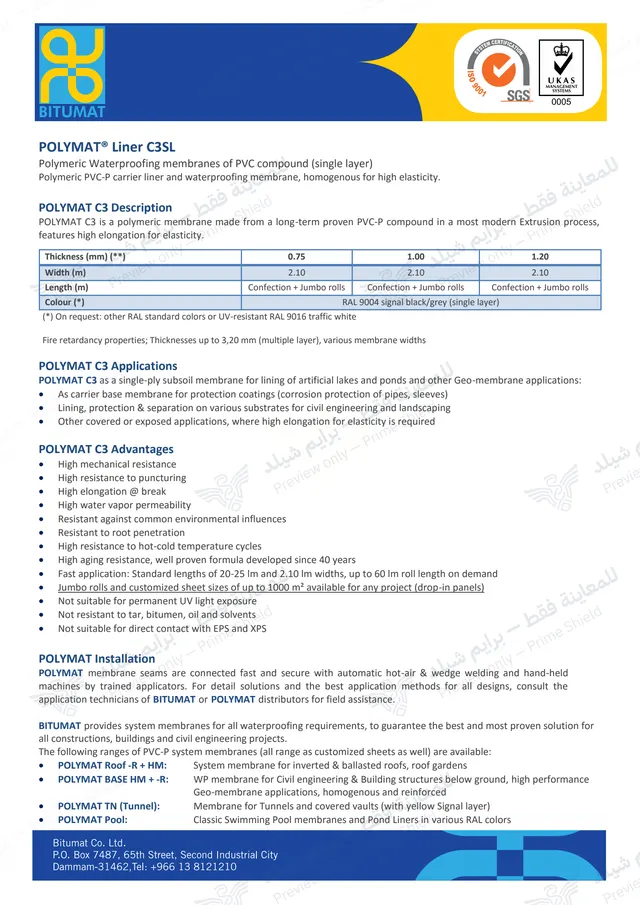
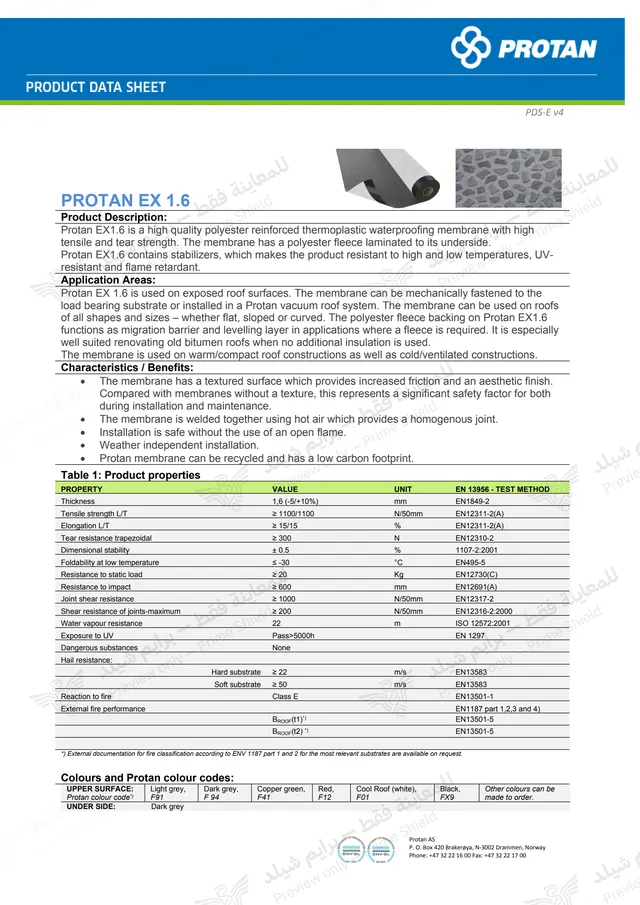
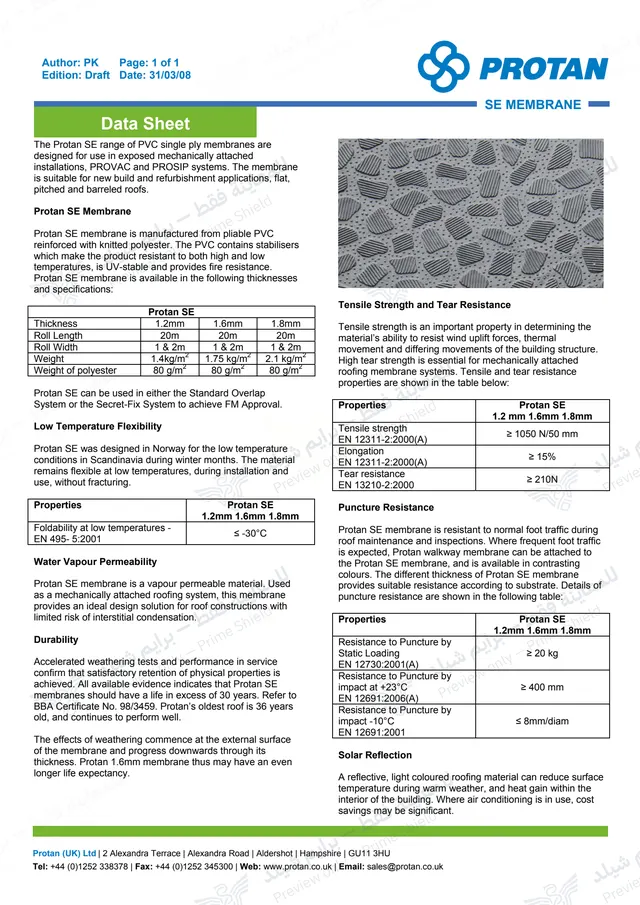
PVC membranes are flexible polyvinyl-chloride sheets, usually reinforced with polyester or glass fibre. Seams are hot-air welded, so the seam becomes the same material as the sheet.
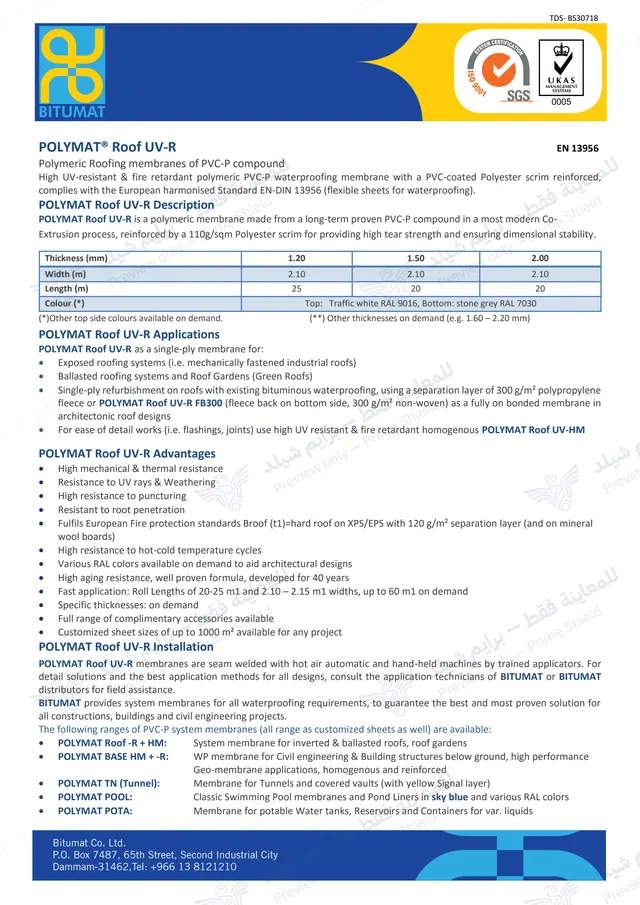
It is fixed mechanically, ballasted or adhered as designed, and roofing grades are usually left exposed because they are UV-stabilised. Light colours reflect part of the solar heat.
PVC
- Family
- Sheet membranes
- Build-up
- 4 layers
Where it fits — and where it does not
A good fit for
- Large exposed roofs, warehouses and industrial buildings
- Roofs over thermal insulation boards
- Basement and pool grades, where the specification calls for them
- Re-roofing existing roofs after a condition survey
Not a fit, or needs a check
- Direct contact with bitumen or polystyrene without a separation layer (plasticiser migration)
- Heavy-traffic areas without protective walkways
- Areas exposed to oils or solvents the grade is not made for
Advantages and limitations
Every system has strengths and limits; the right choice starts from the site conditions.
Advantages
- Homogeneous welded seams that can be tested
- Exposed grades resist UV; light colours reduce heat gain
- No open flame on site
- Fast to install on large areas
Limitations
- Not compatible with bitumen and some insulation boards without separation
- Welding needs trained operators and calibrated equipment
- Puncture-sensitive: protect it from tools, sharp debris and traffic
- Penetrations need prefabricated or site-formed accessories
System build-up
Top to bottom. Final thicknesses and materials follow the approved specification and the product TDS.
System build-up4 layers
PVC membranes
Select a layer to see what it does.
PVC membraneCore layer
The watertight layer; its seams are hot-air welded so they fuse with the sheet.
Separation fleece (geotextile)
Separates the sheet from rough substrates and from incompatible materials such as bitumen and polystyrene.
Thermal insulation
Insulation boards, where the roof design includes them.
Where designed
Screed to falls on the slab
A clean, even deck laid to falls towards the drains.
Preparation and application
Surface preparation
- A clean, smooth deck with no sharp projections
- Falls to the outlets formed in the screed
- A separation fleece (geotextile) over rough or incompatible substrates
- Insulation boards laid tight and fixed as designed
Application sequence
Separation layer
Geotextile fleece laid with overlaps over the substrate or the insulation.
Laying out
Sheets rolled out, aligned and left to relax before fixing.
Fixing
Fasteners in the laps, ballast or adhesive, as designed for wind loads.
Hot-air welding
Seams welded with automatic or hand welders after test welds.
Details
Upstands, outlets and penetrations formed with compatible accessories and termination bars.
Seam testing
Every seam is probed; test strips are peeled where required.
General educational content; final values and requirements follow the manufacturer’s TDS and the approved project specification.
Checks and common mistakes
Quality checks
- Test welds at start-up and whenever conditions change
- Seam probing along every weld
- Fastener pattern and density per the wind design
- A separation layer wherever incompatible materials meet
Common mistakes
- Laying PVC directly on bitumen or polystyrene
- Welding dirty or wet seams
- Skipping test welds, so the settings do not suit the day’s temperature
- Leaving offcuts and screws on the roof
Common questions
Can PVC be laid over an old bituminous roof?
Yes, after a condition survey and with a separation layer, because PVC and bitumen are not compatible in direct contact.
PVC or TPO?
Both are welded thermoplastic sheets; they differ in formulation, compatibility and flexibility. See the comparison page.
Does a white membrane reduce heat?
A light, reflective surface reduces heat gain at the membrane, but the insulation is what controls heat flow into the building.
Next step
Considering this system for your project?
Send drawings or site photos; our engineers review the case and propose the right specification.