


▽ TPOSheet membranes
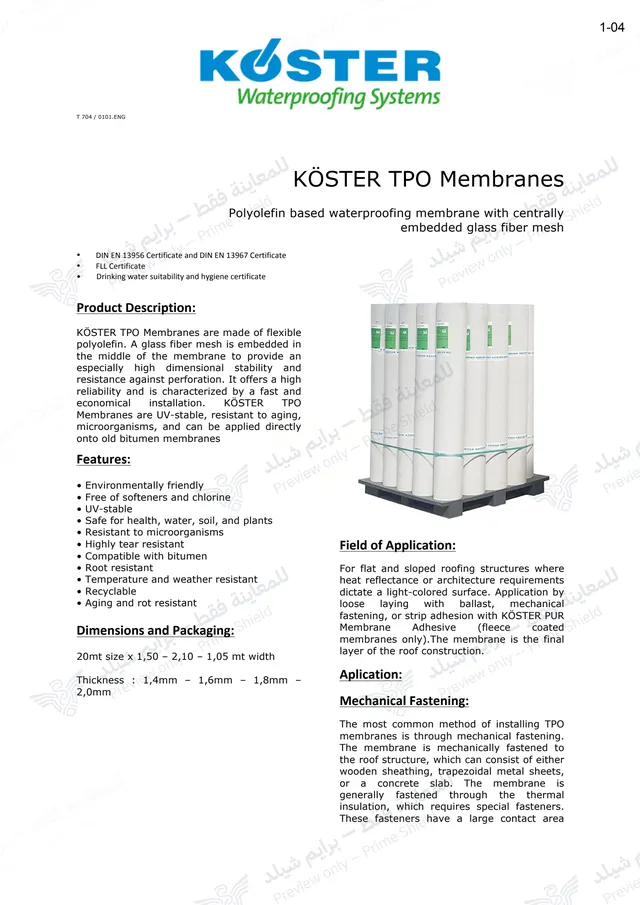
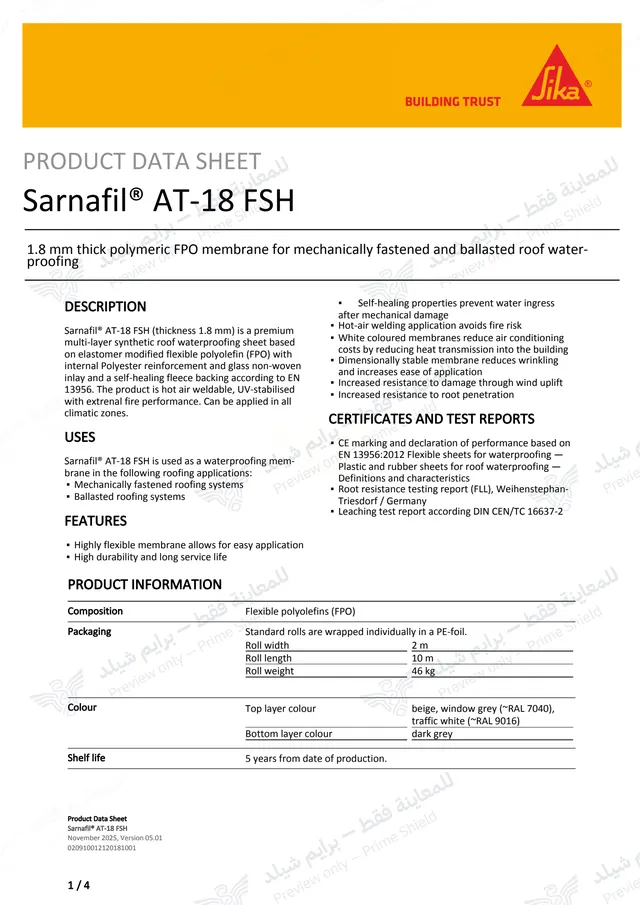
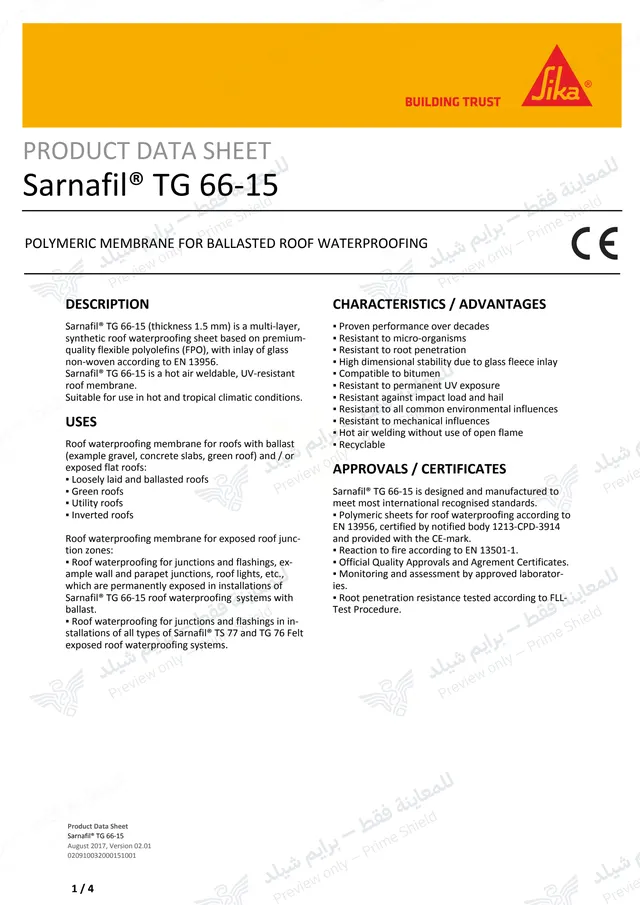
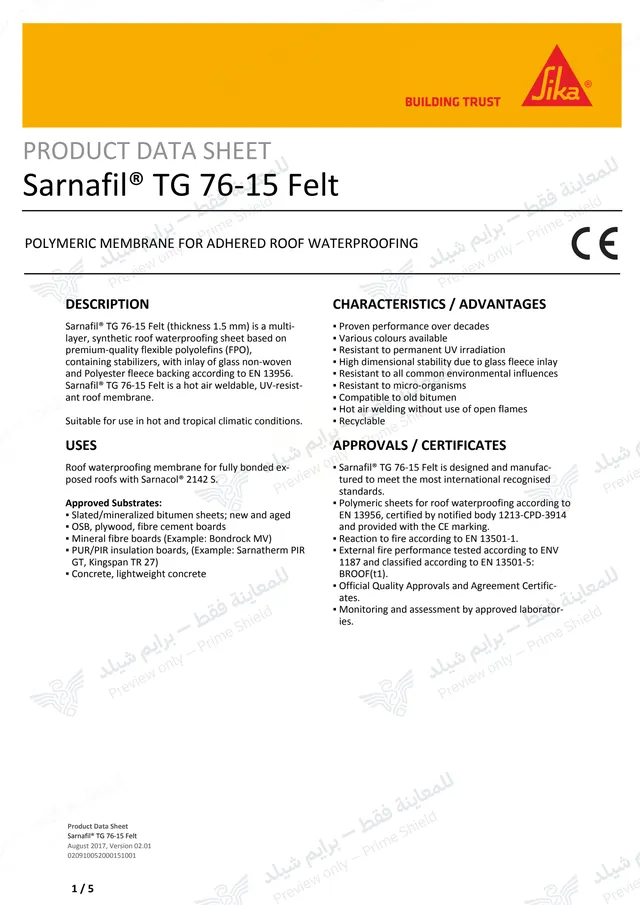
TPO membranes
A single-ply thermoplastic polyolefin sheet with hot-air welded seams, for exposed roofs.
What it is and how it works
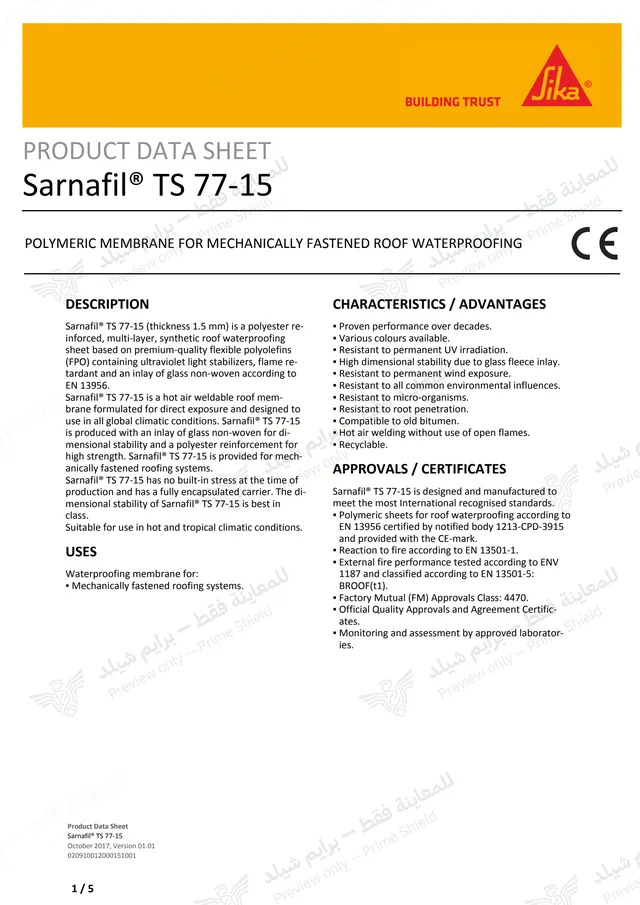
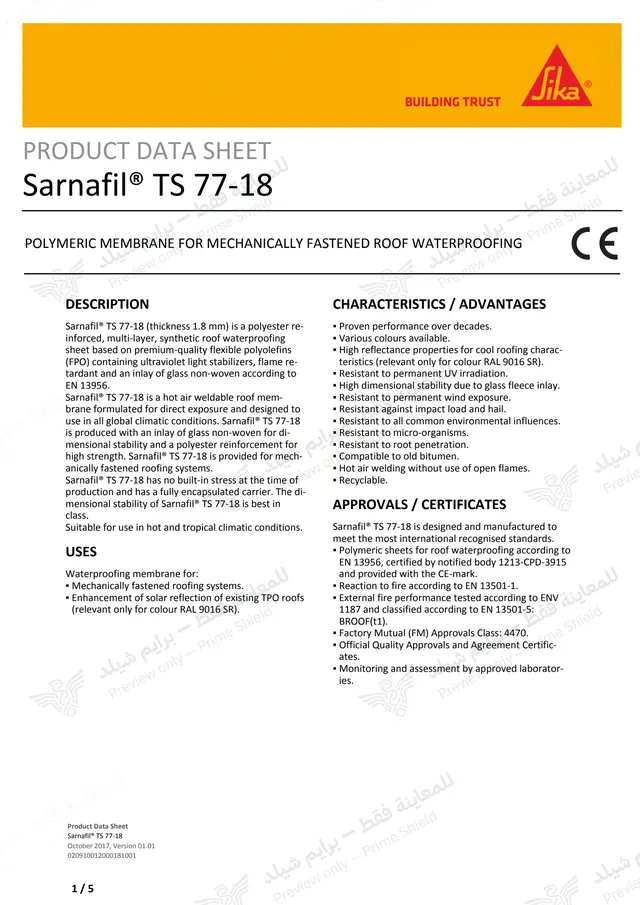
TPO (thermoplastic polyolefin) membranes are sheets usually reinforced with a polyester scrim. Like PVC, their seams are hot-air welded, but the formulation contains no plasticisers.
It is mostly used on exposed roofs in light, reflective colours, fixed mechanically, adhered or ballasted to suit the design and the wind loads.
TPO
- Family
- Sheet membranes
- Used in
- Roof waterproofing
- Build-up
- 3 layers
Where it fits — and where it does not
A good fit for
- Exposed flat roofs and large commercial or industrial roofs
- Roofs over thermal insulation boards
- Re-roofing after a condition survey
Not a fit, or needs a check
- Below-grade tanking and pools, where other systems fit better
- Areas exposed to oils or solvents the grade is not made for
- Heavy-traffic areas without walkways
Application pages
Advantages and limitations
Every system has strengths and limits; the right choice starts from the site conditions.
Advantages
- Homogeneous welded seams that can be tested
- No plasticisers to migrate
- Light, reflective colours
- No open flame
Limitations
- Stiffer than PVC, so details take more care
- A narrower welding window: test welds are essential
- Puncture-sensitive, like other single-ply sheets
System build-up
Top to bottom. Final thicknesses and materials follow the approved specification and the product TDS.
System build-up3 layers
TPO membranes
Select a layer to see what it does.
TPO membraneCore layer
A thermoplastic sheet with hot-air welded seams.
Thermal insulation
Where the design includes it.
Where designed
Substrate
A clean, even deck laid to falls.
Preparation and application
Surface preparation
- A clean, even deck laid to falls
- A separation and protection fleece over rough substrates
- Insulation boards laid tight and fixed
- Outlets and upstands ready
Application sequence
Underlay
Fleece or insulation laid and fixed as designed.
Laying and fixing
Sheets positioned and fixed with fasteners in the laps, adhesive or ballast.
Test welds
Trial welds are peeled to confirm the settings.
Seam welding
An automatic welder on field seams, a hand welder at details.
Details and inspection
Upstands, outlets and penetrations, then every seam probed.
General educational content; final values and requirements follow the manufacturer’s TDS and the approved project specification.
Checks and common mistakes
Quality checks
- Daily test welds
- Seam probing
- Fastener pattern per the wind design
- A final roof walk with defects marked and repaired
Common mistakes
- Welding without test welds
- Seams contaminated by dust or moisture
- Foot traffic with no walkway pads
Common questions
What sets a TPO membrane apart?
A single-ply thermoplastic polyolefin sheet with hot-air welded seams that does not rely on plasticisers for its flexibility, usually in a light, heat-reflecting colour. For PVC versus TPO, see the comparison page.
Is TPO compatible with bitumen?
It depends on the product; follow the manufacturer’s instructions on separation layers.
Next step
Considering this system for your project?
Send drawings or site photos; our engineers review the case and propose the right specification.