


▽ +09.00Cementitious & crystalline
Crystalline waterproofing
Chemicals that react with moisture in concrete and grow crystals that block its pores and hairline cracks.


What it is and how it works
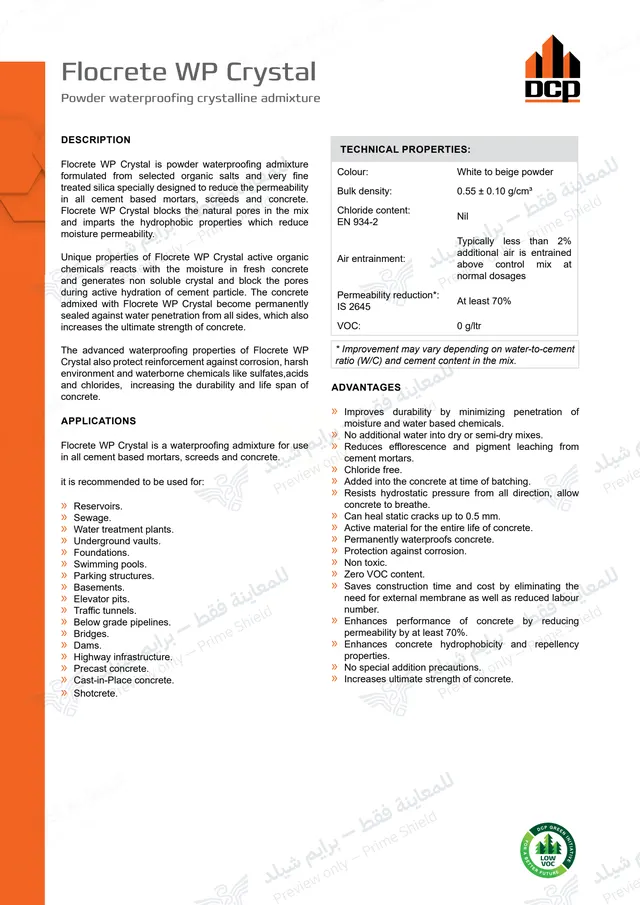
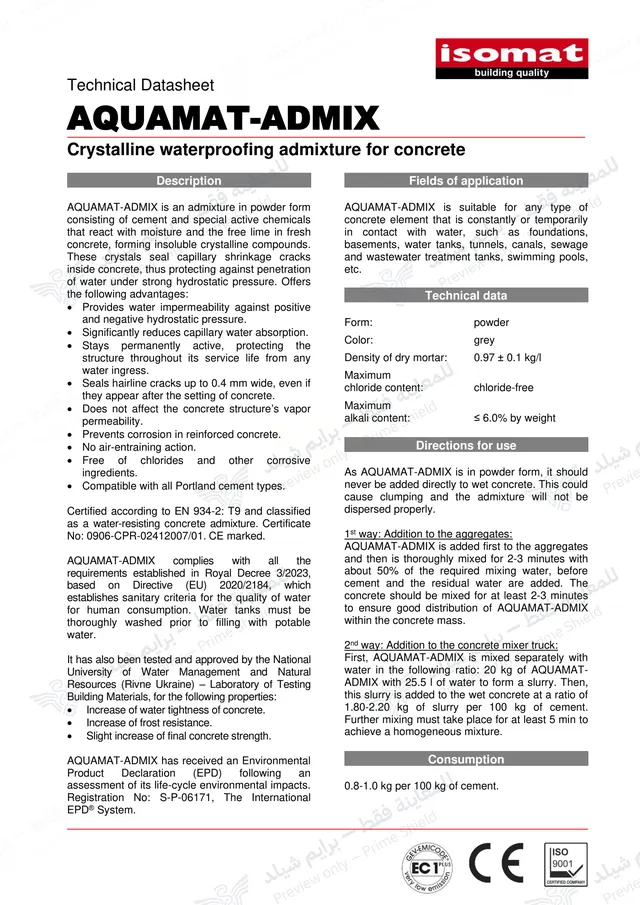
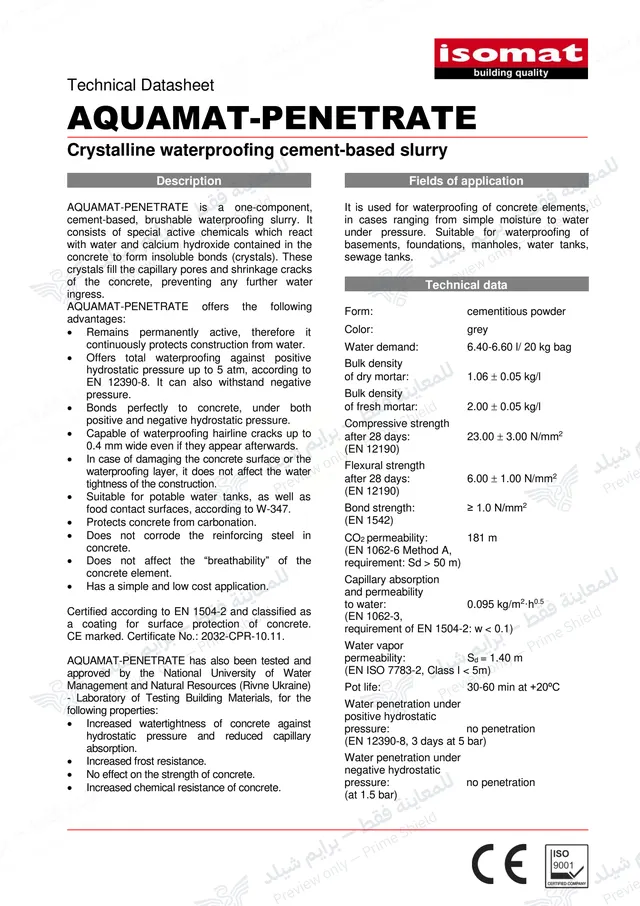
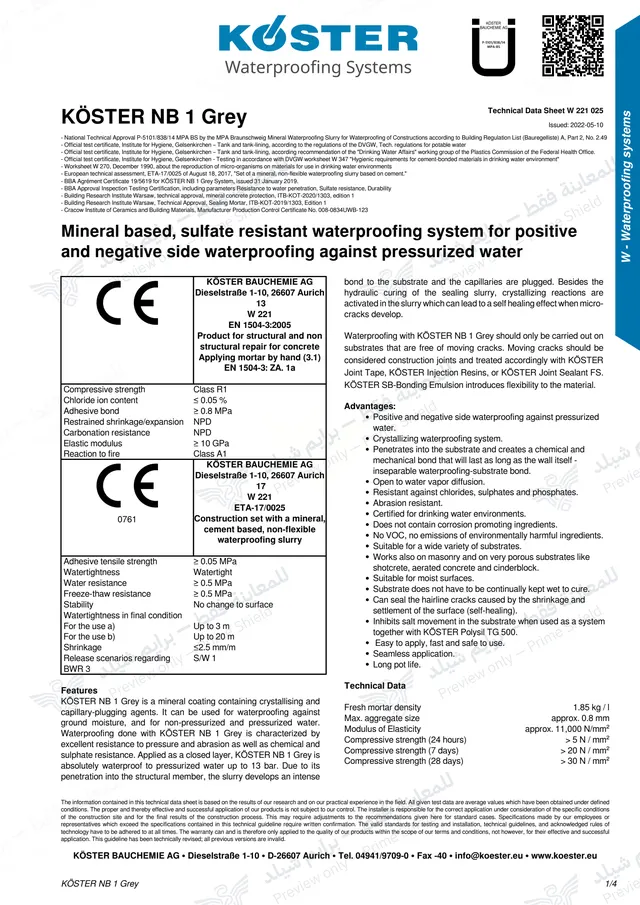
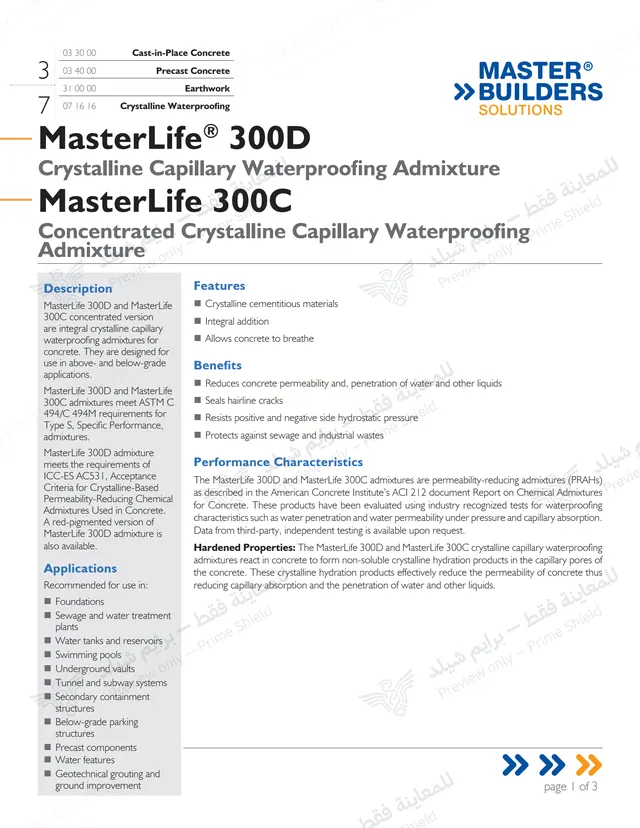
Crystalline waterproofing uses active chemicals that react with moisture and with the by-products of cement hydration inside the concrete, growing insoluble crystals that block pores, capillaries and fine cracks.
It is applied as a slurry to the concrete surface or added to the mix. Because it works within the concrete it suits negative-side treatment; it needs moisture to keep reacting and does not treat moving cracks or joints.
- Family
- Cementitious & crystalline
- Build-up
- 3 layers
- Crystalline coat
- Pores and capillaries
- Crystals formed
Where it fits — and where it does not
A good fit for
- Basements and foundations, including the negative side
- Water tanks, with approved grades
- Lift pits and sumps
- Concrete with fine shrinkage cracks
Not a fit, or needs a check
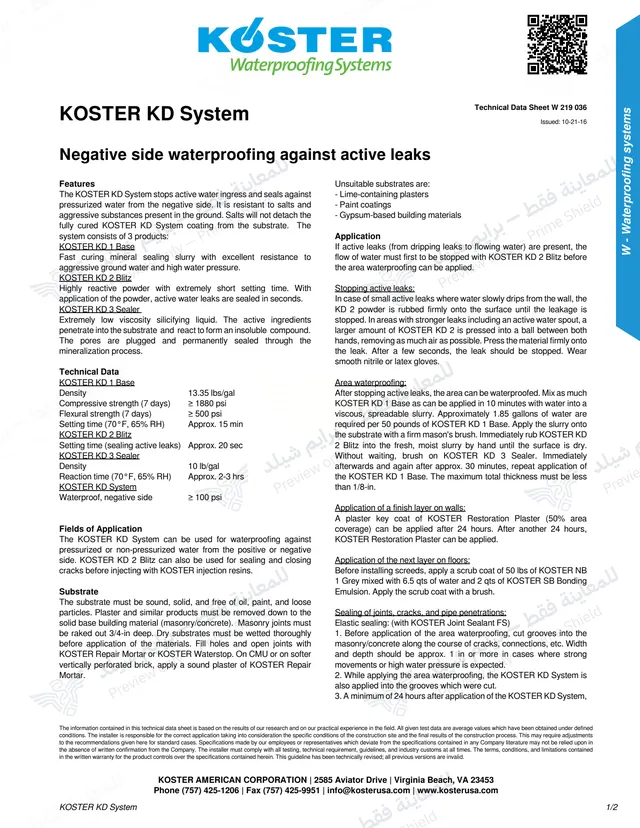
- Moving cracks and joints: treat them with injection or joint systems
- Masonry, blockwork and non-cementitious substrates
- Painted surfaces or curing membranes: the active chemicals cannot penetrate
- Dry structures with no moisture to drive the reaction
Application pages
Advantages and limitations
Every system has strengths and limits; the right choice starts from the site conditions.
Advantages
- Becomes part of the concrete, so it cannot peel
- Works from either side
- Can self-seal fine cracks in the presence of water, depending on the product
- Grades approved for drinking water
Limitations
- Does not bridge moving cracks or joints
- Needs open, clean pores
- Works gradually as crystals grow over time; curing matters
System build-up
Top to bottom. Final thicknesses and materials follow the approved specification and the product TDS.
System build-up3 layers
Crystalline waterproofing
Select a layer to see what it does.
Crystalline slurry coatCore layer
Brushed or sprayed onto pre-wetted concrete; its active chemicals migrate into the concrete.
Crystal growth zoneCore layer
With moisture present, insoluble crystals form and block pores, capillaries and hairline cracks.
Structural concrete
The concrete itself becomes the barrier, so its quality and joint details matter.
Preparation and application
Surface preparation
- Pores opened by water-jetting, grinding or light blasting
- Laitance, form oil, paint and curing compounds removed
- Cracks and construction joints routed and packed with the system’s mortar
- Concrete saturated with water before application
Application sequence
Repairs
Cracks, tie holes and joints prepared and packed.
Saturation
Concrete soaked; the surface left damp with no standing water.
Slurry coats
One or two coats by stiff brush or spray at the TDS rate.
Moist curing
Kept damp and protected for the stated period.
Backfill or finish
After curing, with compatible finishes only.
General educational content; final values and requirements follow the manufacturer’s TDS and the approved project specification.
Checks and common mistakes
Quality checks
- Surface profile and cleanliness before application
- Coverage rate per m²
- Curing record
- A water test, or observation of treated areas over time
Common mistakes
- Applying on smooth, sealed or dry concrete
- Expecting it to close moving cracks or joints
- Skipping moist curing in hot weather
- Painting over it too early
Common questions
Admixture or coating?
An admixture treats the whole concrete section during construction; a coating treats existing concrete. See the article.
Does it work inside a leaking basement?
Yes, on sound concrete, once active leaks are stopped and cracks treated.
How does crystalline differ from cementitious waterproofing?
Crystalline treatment reacts inside the concrete’s pores and grows crystals that seal them from within; cementitious systems are coats bonded to its surface. One or both are chosen to suit the location.
Does crystalline waterproofing seal cracks?
It seals static hairline cracks in the presence of moisture, up to the width stated in the product data sheet. Moving or wider cracks need injection or treatment as a joint.
Manufacturers
Our documented relationship with each manufacturer; the specification sets the product.
- PenetronCertified applicator
Next step
Considering this system for your project?
Send drawings or site photos; our engineers review the case and propose the right specification.