


▽ +09.00Cementitious & crystalline
Cementitious waterproofing
Polymer-modified cementitious coats that bond to concrete, for basements, tanks, pools and wet areas.

What it is and how it works
Cementitious waterproofing is coats of cement, fine aggregate and additives, usually polymer-modified, applied by brush, trowel or spray to pre-wetted concrete, bonding to it and closing its pores.
Rigid grades resist water pressure and, depending on the product, work on the positive or negative side; flexible two-component grades tolerate small movements and bridge hairline cracks. Some grades are approved for drinking water.
- Family
- Cementitious & crystalline
- Used in
- Basement & foundation waterproofingWater tank waterproofingPool & water-feature waterproofingWet-area waterproofingFacades
- Build-up
- 4 layers
Where it fits — and where it does not
A good fit for
- Basements, lift pits and sumps
- Water tanks, with grades approved for drinking water
- Pools under tiles
- Wet areas under tiles
- Internal treatment where the outside cannot be reached
Not a fit, or needs a check
- Structures with movement or live cracks (rigid grades)
- Exposed roofs with thermal movement
- Weak, contaminated or painted substrates
Advantages and limitations
Every system has strengths and limits; the right choice starts from the site conditions.
Advantages
- Bonds to concrete and tolerates damp substrates
- Works on either side, depending on the product
- Grades approved for drinking water are available
- Tiles bond well over it
Limitations
- Rigid grades crack with movement
- Needs curing; affected by heat and wind during application
- Thickness and coverage depend on workmanship
System build-up
Top to bottom. Final thicknesses and materials follow the approved specification and the product TDS.
System build-up4 layers
Cementitious waterproofing
Select a layer to see what it does.
Finish or protection
Render, tiles or a screed, depending on use.
Where designed
Second cementitious coatCore layer
Applied crosswise to the first, up to the specified thickness.
First cementitious coatCore layer
Brushed onto a pre-wetted surface, with tape or reinforcement at corners and joints.
Pre-wetted concrete
Saturated surface-dry, open-pored and with defects repaired.
Preparation and application
Surface preparation
- Laitance, form oil and loose material removed
- Honeycombing and tie holes repaired; leaks stopped first
- Coves at wall-floor junctions
- Pre-wetted to saturated surface-dry, with no standing water
Application sequence
Pre-wetting
The surface is saturated, then excess water removed.
First coat
Brushed or sprayed well into the pores.
Detail reinforcement
Tape or mesh at corners, joints and penetrations where the system specifies.
Second coat
Applied crosswise once the first coat allows.
Curing
Kept moist and shielded from sun and wind as the TDS states.
Testing and finishing
A flood test for tanks and pools before tiling or the lining.
General educational content; final values and requirements follow the manufacturer’s TDS and the approved project specification.
Checks and common mistakes
Quality checks
- Preparation and repairs accepted before the first coat
- Consumption per m² reconciled with the specified rate
- Curing record
- Flood / water test, recorded
Common mistakes
- Applying on dry, hot concrete: a poor bond and cracking
- Coating over an active leak
- One thick coat instead of two
- No curing in hot weather
Common questions
Can cementitious waterproofing work from inside a basement?
Some rigid grades are made for negative-side pressure; they need a sound substrate and the leaks stopped first.
Rigid or flexible?
Flexible grades where small movements or hairline cracks are expected; rigid grades for pressure on stable structures.
PU or cementitious for wet areas?
Both work under tiles; see the comparison page for the criteria.
Manufacturers
Our documented relationship with each manufacturer; the specification sets the product.
- Fosroc (Saint-Gobain)Approved applicator · Materials we have used
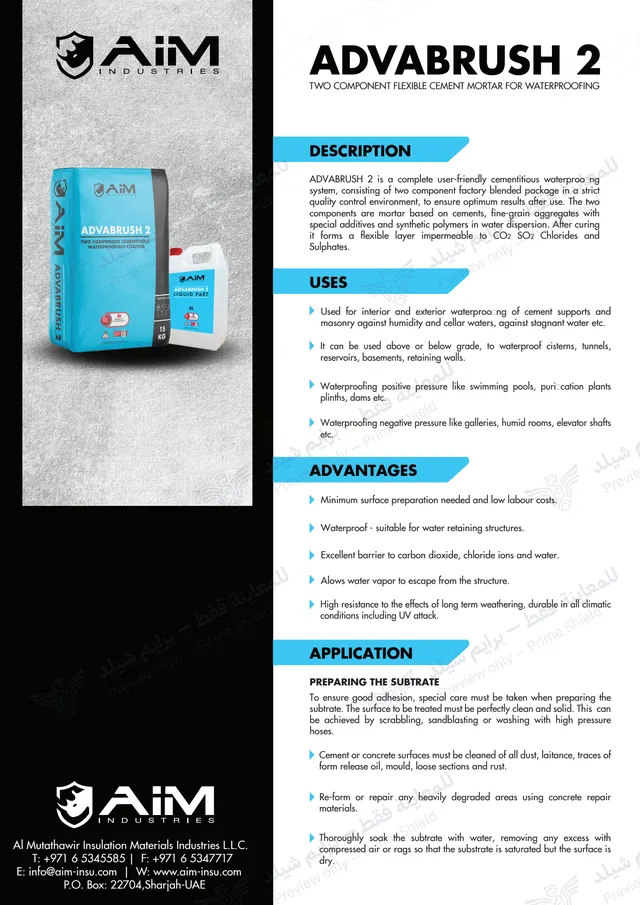
- AIM IndustriesApproved applicator · Sister company · Materials we have used
Technical data for this system
Projects where it was applied or is contracted


Next step
Considering this system for your project?
Send drawings or site photos; our engineers review the case and propose the right specification.