


▽ +09.00Injection
Crack injection (epoxy & PU)
Resin injected into cracks: epoxy to re-bond, or polyurethane to stop water.

What it is and how it works
Crack injection pushes a suitable resin under pressure into a crack through packers set along it, filling the void through the depth of the element, not just at the surface.
The resin follows the goal: epoxy to restore bond in dry, dormant cracks; polyurethane to stop water in wet or active cracks, since it reacts with water and stays flexible. No crack is injected before its cause is understood.
- Family
- Injection
- Build-up
- 4 layers
- Packer
- Crack
- Injected resin
- Surface seal
Where it fits — and where it does not
A good fit for
- Leaking cracks in basements, tanks and lift pits
- Dormant structural cracks that need bond restored — epoxy, with the engineer’s approval
- Leaking construction joints and honeycombed zones
Not a fit, or needs a check
- Expansion joints designed to move: use joint systems
- Cracks still growing from an unresolved structural cause
- Epoxy in wet, leaking cracks
- Large voids without a suitable filler or grout
Advantages and limitations
Every system has strengths and limits; the right choice starts from the site conditions.
Advantages
- Treats the crack through its depth, not just the surface
- Done from the accessible side, e.g. from inside
- Minimal breaking out
Limitations
- Does not remove the cause: movement, overload or corrosion
- The result depends on packer spacing, pressure and resin choice
- New cracks may appear if the cause remains
System build-up
Top to bottom. Final thicknesses and materials follow the approved specification and the product TDS.
System build-up4 layers
Crack injection (epoxy & PU)
Select a layer to see what it does.
Surface seal
Caps the crack mouth so the resin does not escape during injection.
Injection packers
Set at intervals along the crack, or in angled holes drilled to cross it.
Injected resinCore layer
Epoxy to re-bond dry, dormant cracks; polyurethane to stop water coming through.
Concrete element
A wall, slab or soffit; the crack is diagnosed before the resin is chosen.
Preparation and application
Surface preparation
- Crack mapping: width, length, moisture and movement
- An engineer’s review for structural cracks
- Crack line cleaned; holes drilled at an angle to intersect the crack
- Surface sealed between packers where needed
Application sequence
Drilling
Holes drilled alternately on both sides of the crack and flushed clean.
Packers
Packers set and tightened; surface seal applied where required.
Injection
Resin pumped from the lowest packer upward until it shows at the next one.
Re-injection
A second pass where the crack takes up resin or water persists.
Finishing
Packers removed, holes filled, the surface made good.
General educational content; final values and requirements follow the manufacturer’s TDS and the approved project specification.
Checks and common mistakes
Quality checks
- Crack map and injection log: packer, resin, pressure and quantity
- No visible water after cure
- Cores where the specification requires proof of fill
Common mistakes
- Surface-only sealing that diverts the water elsewhere
- A resin that does not suit the moisture condition
- Packers that do not intersect the crack
- Injecting before the cause is understood
Common questions
Epoxy or polyurethane?
Epoxy restores bond in dry, dormant cracks; polyurethane stops water and tolerates movement.
Will the crack come back?
If the cause (movement, settlement or corrosion) continues, new cracks can form, so the cause is treated first.
Can a crack be injected while water is coming through?
Yes, with a water-reactive polyurethane resin that expands to stop the flow. Epoxy needs a dry crack to re-bond it, so work sometimes starts with polyurethane and continues with epoxy where the engineer requires it.
Manufacturers
Our documented relationship with each manufacturer; the specification sets the product.
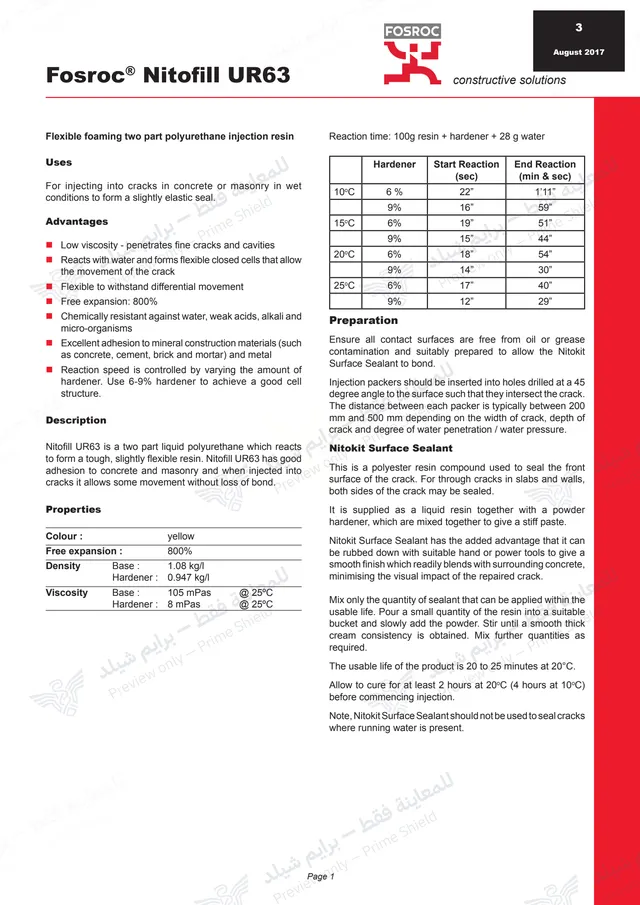
- Fosroc (Saint-Gobain)Approved applicator · Materials we have used
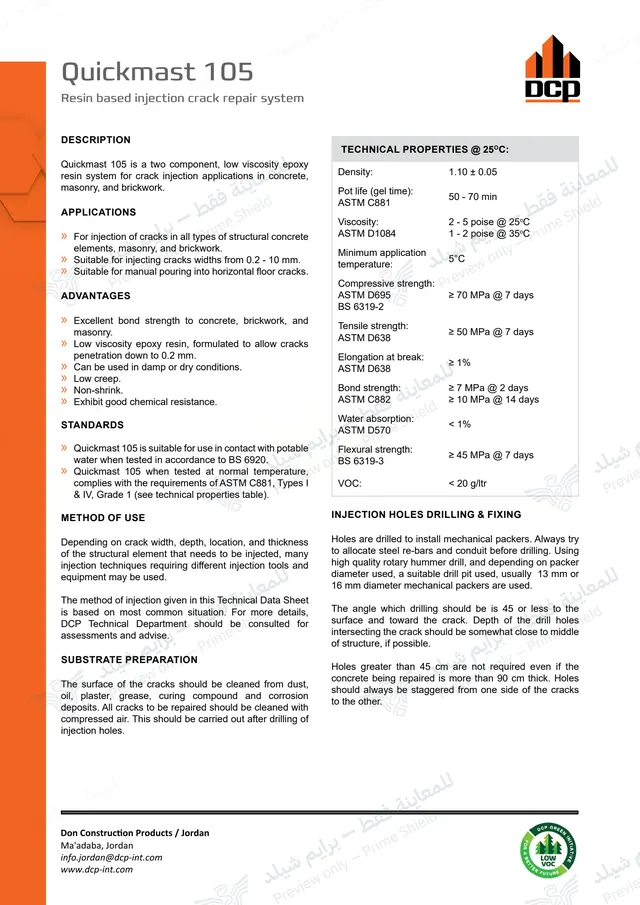
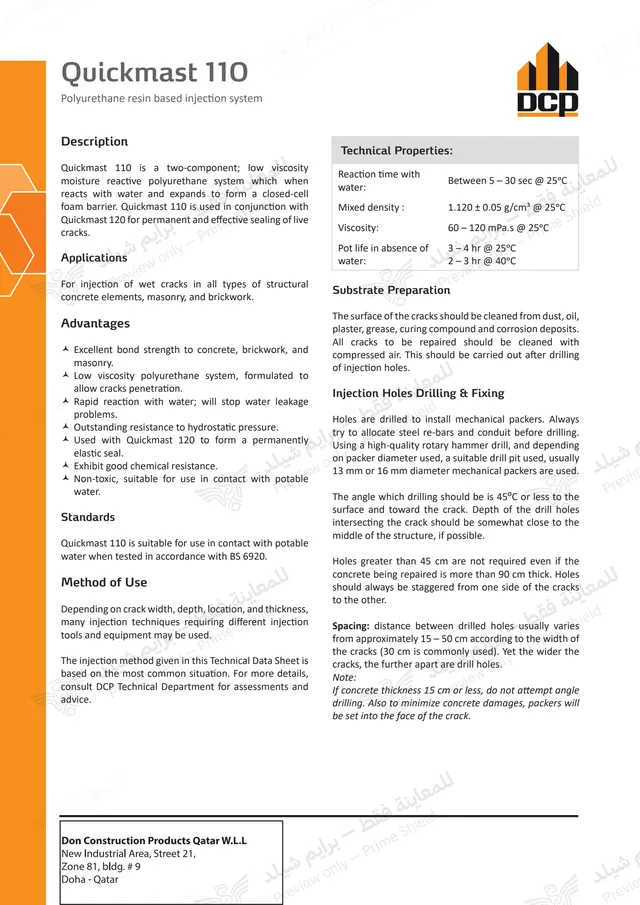
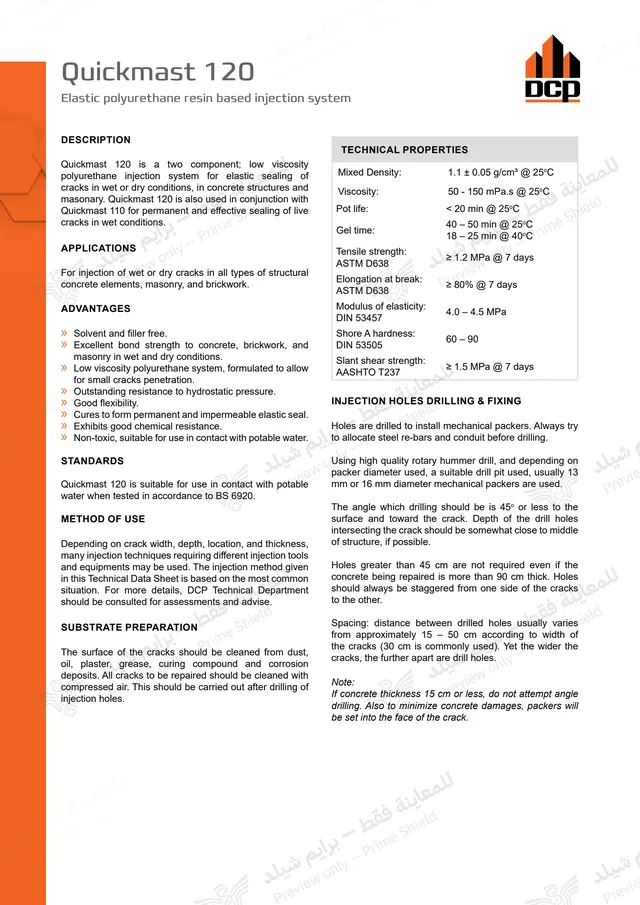
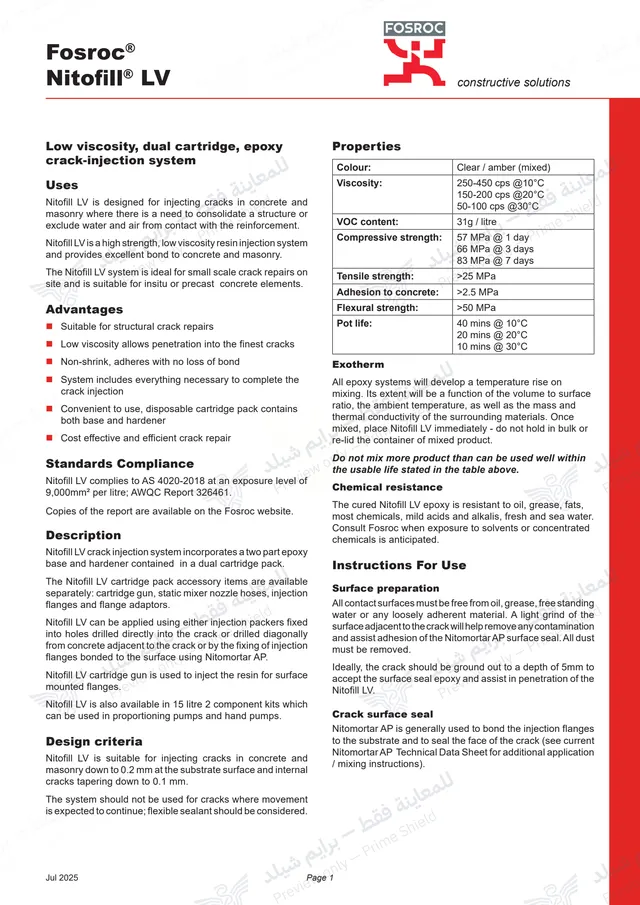
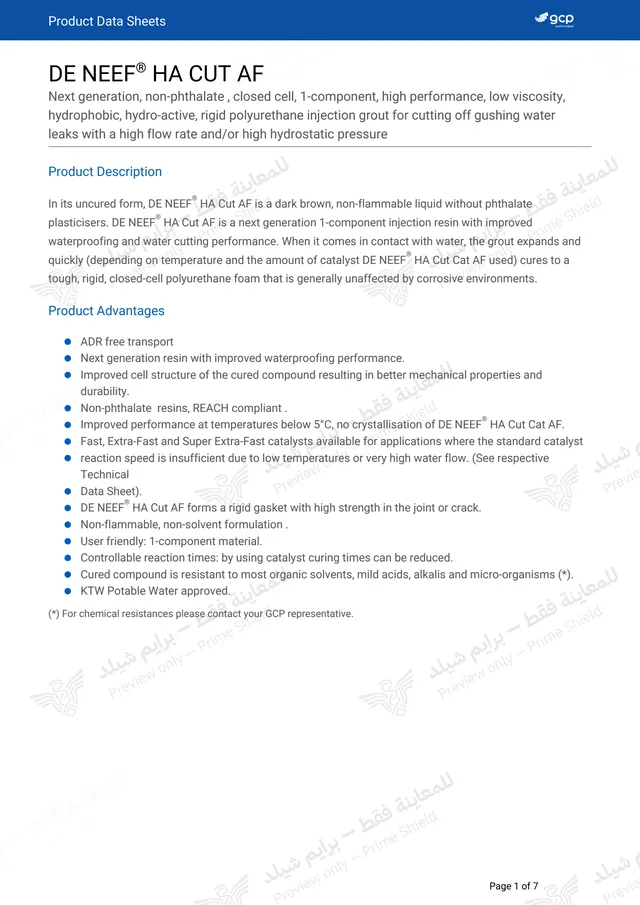
Technical data for this system
Projects where it was applied

Next step
Considering this system for your project?
Send drawings or site photos; our engineers review the case and propose the right specification.