


▽ PUThermal insulation
Spray polyurethane foam insulation
A closed-cell rigid foam sprayed in place to form continuous, joint-free thermal insulation.


What it is and how it works
Spray polyurethane foam is a two-component material sprayed on site that expands and sets within seconds into a continuous, joint-free insulating layer, bonded to concrete or metal and following the shape of the surface.
Closed-cell foam combines thermal insulation with water resistance, but it degrades under UV, so it is covered by a flexible protective top coat (acrylic or another elastomeric coat, per the system). It is applied to concrete roofs and metal-sheet roofs.
PU
- Family
- Thermal insulation
- Used in
- Roof waterproofingFacades
- Build-up
- 4 layers
- Spray gun
- Foam passes
- Top coat
Where it fits — and where it does not
A good fit for
- Concrete roofs, over the screed to falls
- Metal-sheet roofs of warehouses and factories
- Roofs with complex shapes and many penetrations
- Walls and soffits where the design specifies
Not a fit, or needs a check
- Spraying in wind or dust, or onto wet surfaces
- Leaving the foam exposed without its top coat
- Interiors without the fire protection the code requires
- Heavy foot traffic without walkways
Application pages
Advantages and limitations
Every system has strengths and limits; the right choice starts from the site conditions.
Advantages
- Continuous insulation with no joints and no thermal bridges at seams
- Insulation and water resistance in one layer (closed cell)
- Light; suits metal roofs
- Seals around fixings and penetrations
Limitations
- UV-sensitive: the top coat must be maintained
- Quality depends on weather, equipment and operator
- Overspray risk to the surroundings
- Surface texture varies with workmanship
System build-up
Top to bottom. Final thicknesses and materials follow the approved specification and the product TDS.
System build-up4 layers
Spray polyurethane foam insulation
Select a layer to see what it does.
Protective top coat
Protects the foam from the UV that degrades its surface.
Sprayed PU foamCore layer
A closed-cell rigid foam sprayed in passes to the calculated thickness.
Screed to falls
On concrete roofs: the falls come before the foam.
Concrete roofs
Slab or metal sheet
A clean, dry substrate.
Preparation and application
Surface preparation
- A clean, dry, sound substrate; rust treated on metal sheets
- Falls formed beforehand on flat concrete roofs
- Primer where the substrate requires
- Surroundings masked; weather checked
Application sequence
Prepare the substrate
Cleaning, repairs and primer as needed.
Equipment set-up
Temperatures, pressures and ratio checked on a test spray.
Foam passes
Built up in passes to the specified thickness, keeping the falls.
Thickness check
Probe readings on a grid.
Top coat
The protective coat in the specified coats and colour — the same day where possible.
General educational content; final values and requirements follow the manufacturer’s TDS and the approved project specification.
Checks and common mistakes
Quality checks
- Weather log: temperature, humidity and wind
- Foam thickness readings
- Adhesion and cell structure checked on samples
- Top-coat coverage and thickness
- Ponding check after rain or with a water test
Common mistakes
- Spraying on damp surfaces: poor adhesion and blistering
- Uneven thickness that causes ponding
- Delaying the top coat: UV damage
- No maintenance of the top coat
Common questions
Does PU foam keep water out as well?
Closed-cell foam resists water when it is continuous and protected by its top coat; the details and falls still matter.
How is a metal roof prepared before the foam is sprayed?
The sheets are cleaned, treated for rust and dry within the data sheet’s temperature limits, so the foam bonds and also seals the laps and fixings.
What is the top coat for?
It shields the foam from UV and weather, and needs periodic inspection and renewal.
What is spray foam insulation?
A rigid, closed-cell polyurethane foam sprayed on site that bonds to concrete or metal and forms a continuous layer without joints, then gets a coat that protects it from the sun.
Is spray foam insulation safe in terms of fire?
Polyurethane foam is combustible, and its fire performance depends on the product’s classification and the layer that covers it. The product and its covering are therefore chosen to meet the fire requirements of the Saudi Building Code and the project specification.
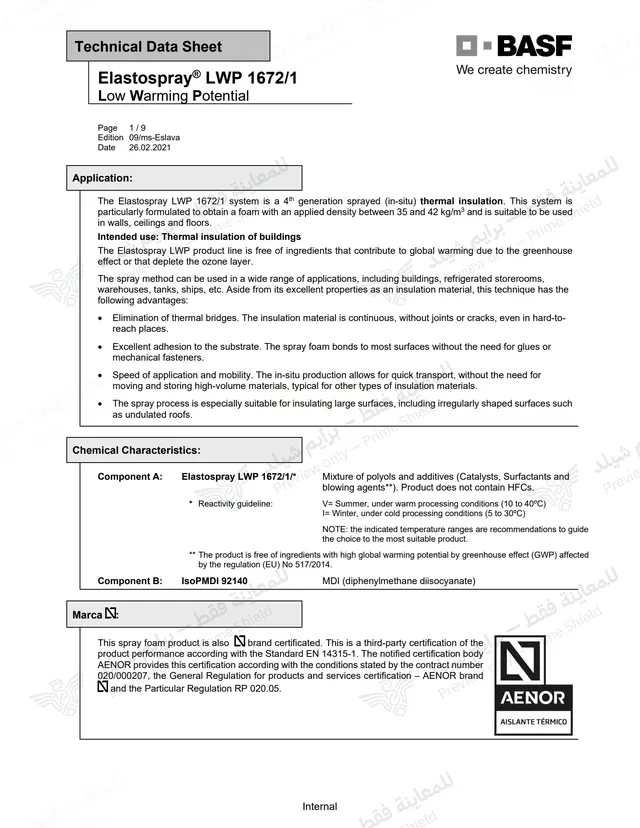
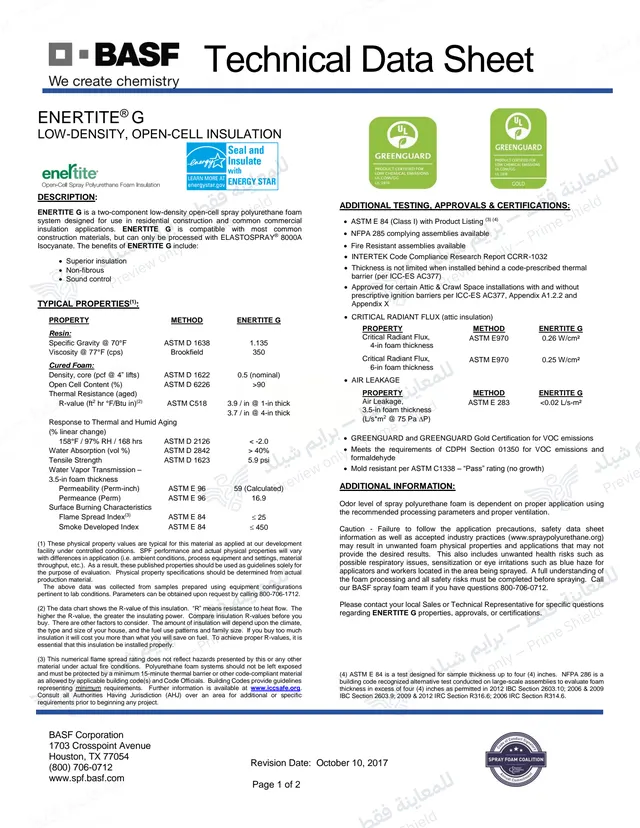
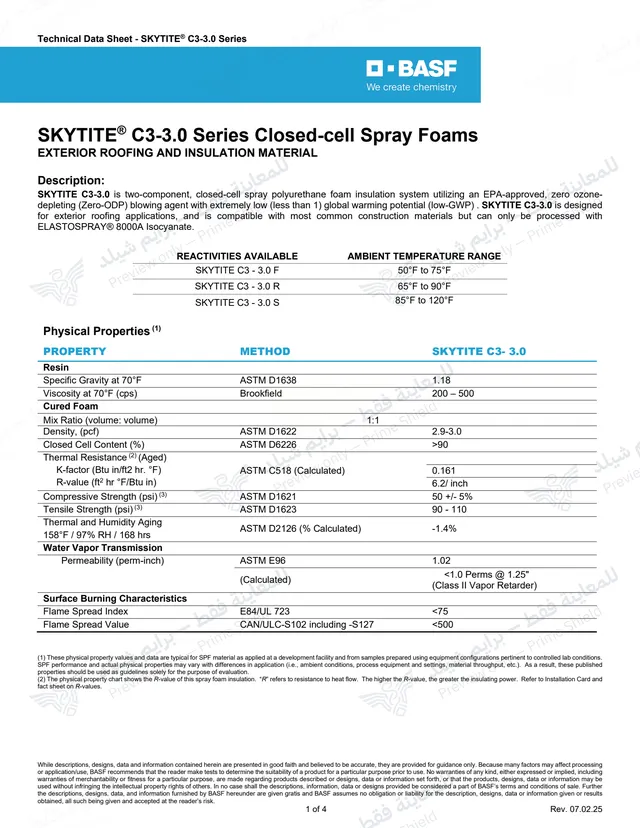
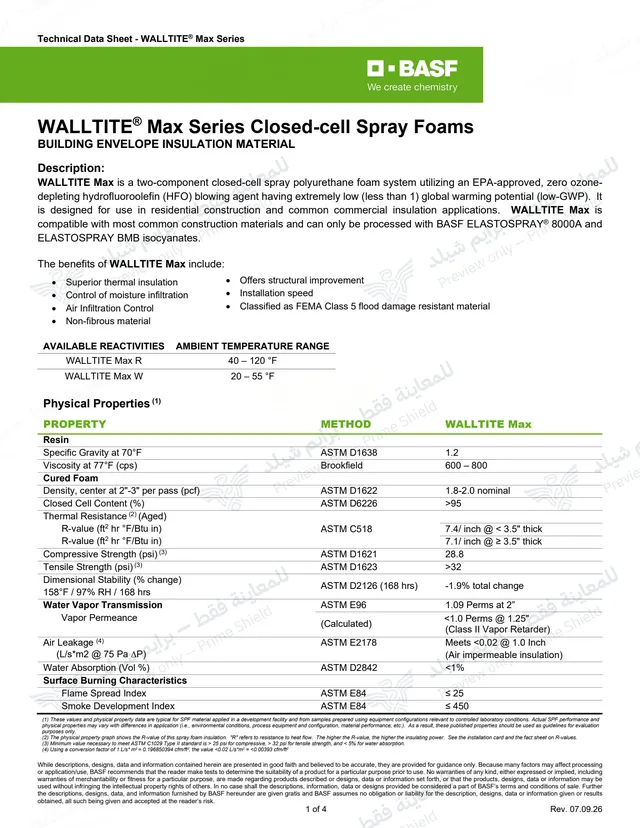
Technical data for this system
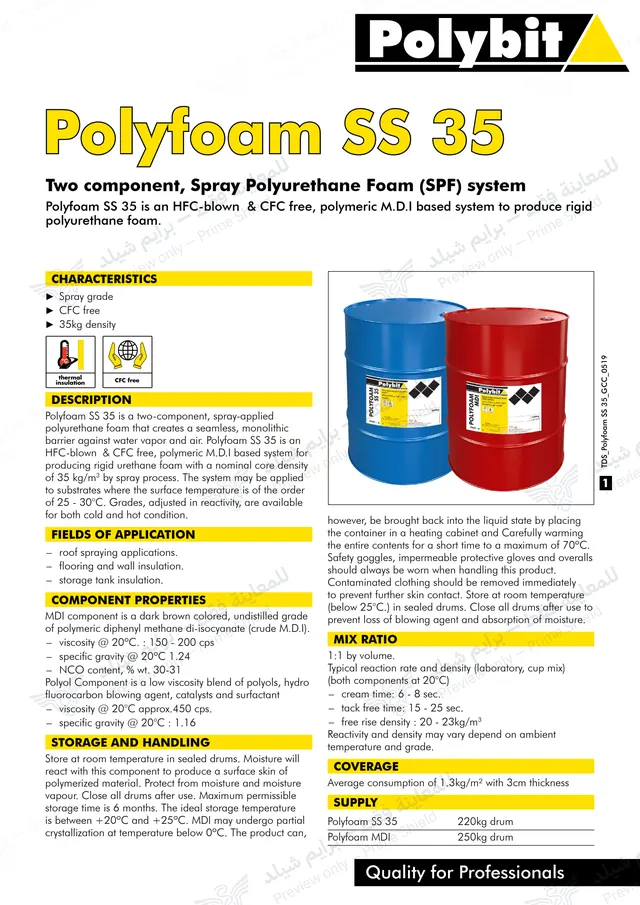
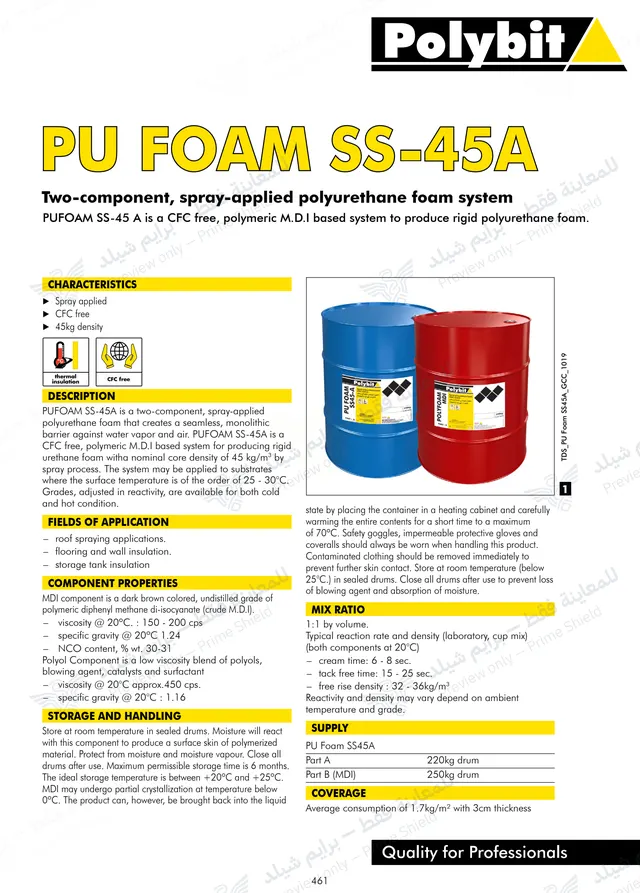
Projects where it was applied

Next step
Considering this system for your project?
Send drawings or site photos; our engineers review the case and propose the right specification.