


▽ +06.00Protection solutions · Concrete
Concrete repair and protection
We repair cracks, honeycombing, spalling and corroding steel, then protect the concrete from carbonation and moisture — a repair that ignores the cause comes back.

Engineering view
What is concrete repair and protection?
Concrete protects its reinforcement with its alkalinity and the cover over the bars. Over time carbon dioxide and moisture work into that cover and lower its alkalinity (carbonation); moisture or chlorides reach the steel, which rusts, expands and pushes the concrete off. Cracks, honeycombing and open tie holes give water a shorter way in.
A repair that lasts follows the logic of the BS EN 1504 series: the condition of the concrete and the cause of the damage are assessed first, then the repair and protection methods are chosen for them. So each location gets the method its damage calls for, and then the whole element is protected.
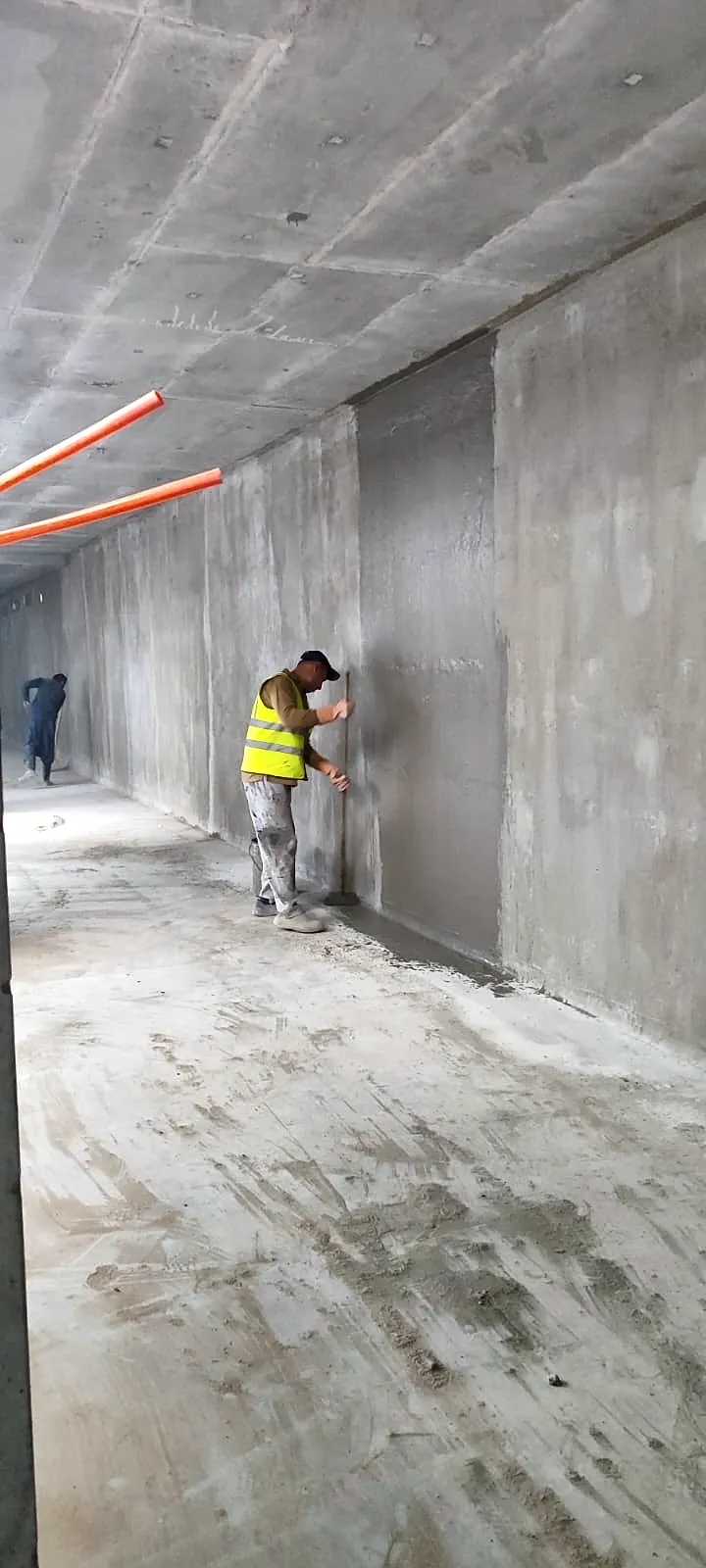
15,000m²
of basement soffits under anti-carbonation treatment at Dyari Signature, across nine zones (in progress)
Project record · Prequalification 2026
Problems it solves
What goes wrong
Honeycombing
Voids left by poor compaction, often at the base of walls and around dense reinforcement.
Spalling and exposed steel
Rusting steel expands and pushes the cover off.
Cracks
Shrinkage, thermal and structural cracks — some dormant, some still moving, some leaking.
Carbonation
Invisible at first: the alkalinity of the cover drops until the steel is no longer protected.
Rust stains and efflorescence
Signs that water is travelling through the concrete and carrying salts with it.
Diagnose by symptom
How it fails
Why concrete spalls, and how it is put right
- Cover concrete Protects the steel by its alkalinity and depth.
- Carbonation front Advances from the surface inwards over time.
- Reinforcement Protected while the front stays away from it.
- Corrosion and spalling Rust expands, cracks the cover and pushes it off.
- Repair mortar After the steel is cleaned and treated.
- Protective coating Slows the next carbonation across the whole element.
General educational content; final values and requirements follow the manufacturer’s TDS and the approved project specification.
The result
Key benefits
The cause is treated, not only the visible damage
The reinforcement protected again — cleaned, treated and covered
Elements rebuilt to their profile and section
A protective coat that slows the next cycle of damage
Repair scope
What we repair
- C.01
Honeycomb repair
Weak concrete removed back to sound material, then filled with a repair mortar or grout that suits the depth.
Systems Concrete repair
- C.02
Spalling repair
Concrete broken out around the corroded steel, the bars cleaned and treated, then the section rebuilt with repair mortar.
Systems Concrete repair
- C.03
Structural cracks
Dormant cracks injected with epoxy to restore the bond across them, with the structural engineer’s approval.
Systems Crack injection
- C.04
Non-structural cracks
Leaking cracks injected with polyurethane to stop the water; fine surface cracks treated before the protective coat.
Systems Crack injection
- C.05
Repair mortars
Modified cementitious mortars chosen for the depth, the position — vertical or overhead — and the strength required.
Systems Concrete repair
- C.06
Corrosion protection
Exposed bars cleaned of rust and coated before rebuilding; protective coatings for steel and concrete in aggressive areas.
- C.07
Anti-carbonation
A coating that limits carbon dioxide and water entering the concrete — for façades, frames, basement soffits and car parks.
Systems Anti-carbonation
- C.08
Protective coatings
Multi-coat systems that isolate concrete and steel from moisture and chemicals in sumps, plant rooms and industrial areas.
Systems Protective coatings
- C.09
Injection repair
Resin injected through packers into cracks, construction joints and honeycombed zones.
Systems Crack injection
By technology
Repair and protection systems
- Cementitious & crystallineCrystalline waterproofingChemicals that react with moisture in concrete and grow crystals that block its pores and hairline cracks.
- InjectionCrack injection (epoxy & PU)Resin injected into cracks: epoxy to re-bond, or polyurethane to stop water.
- Concrete repair & protectionConcrete repair with repair mortarsBreaking out damaged concrete, treating the reinforcement and rebuilding the section with a suitable repair mortar.
- Concrete repair & protectionAnti-carbonation coatingsA coating that restricts carbon dioxide entering concrete, slowing carbonation and rebar corrosion.
- Concrete repair & protectionProtective coatings (corrosion & chemicals)Multi-coat systems that isolate steel and concrete from moisture and chemicals.


How the system is chosen
| Situation | Suitable systems | Why |
|---|---|---|
| Spalling with exposed or rusting steel | Concrete repair Anti-carbonation | Rebuild the section, then protect the whole element. |
| A crack or pour joint that leaks | Crack injection | Polyurethane injection stops the water through the crack. |
| A dormant structural crack | Crack injection | Epoxy injection restores the bond, with the structural engineer’s approval. |
| Sound but exposed concrete | Anti-carbonation | Slows carbonation before the steel is at risk. |
| Aggressive exposure: sumps, plant rooms, chemicals | Protective coatings | Coats that isolate the surface from moisture and chemicals. |
| Concrete in contact with water: tanks, basements | Crystalline | Crystals block the pores and hairline cracks from inside the concrete. |
A starting point only: the final system follows the inspection, the approved specification and the product TDS.
Brand-neutral
Manufacturers & approvals
- Weber (Saint-Gobain)Approved applicatorCertificate
- Fosroc (Saint-Gobain)Approved applicatorCertificate
- DCP SaudiCertified applicatorCertificate
- PenetronCertified applicatorCertificate
We start from the engineering of the system, then the product. Manufacturers appear here only with their documented relationship; this does not imply a commercial partnership.
Before work starts
Surface preparation
- Map the damage: sound the surface for hollow areas, and record cracks, spalls and rust stains.
- Saw-cut the repair edges and break out to sound concrete — behind corroded bars where needed.
- Clean the bars of rust, and report any bar that has lost much of its section to the engineer.
- A clean, dust-free substrate, pre-wetted where the mortar requires it.
Sequence
Installation process
Survey and mark out the damage
We inspect the concrete, map the cracks, spalling and rust, and set the treatment for each area.
Prepare
Damaged concrete removed, the steel cleaned and treated against rust, the surface prepared.
Repair and inject
Repair mortar to rebuild, and crack injection with epoxy or polyurethane depending on the aim: restoring bond or stopping a leak.
Protect
Anti-carbonation coating, crystalline treatment or protective coatings, depending on the location.
Check and hand over
Repairs sounded, coating thickness measured and adhesion tested where the specification asks, all recorded in the quality file.
Inspection & testing
QA/QC
- Repairs sounded after curing to confirm there are no hollows.
- Mortar cured as the product requires, with no early drying.
- Coating dry-film thickness measured against the specification.
- Pull-off adhesion tests where the specification requires them.
- Injection: packers removed, holes sealed and the crack checked for leaks.
QA/QC checklistsConcrete repairCrack and joint injectionProtective and anti-carbonation coatings
What we avoid
Common failures
Patching over rusty steel without cleaning it
Corrosion continues under the patch and spalling returns around it.
Feather-edged patches
Thin edges crack and debond; the edges are saw-cut first for that reason.
A rigid filler in a moving crack
The crack reopens beside it; a moving crack is treated as a joint.
Coating over damage that was never repaired
It hides the problem without stopping it.
Letting the mortar dry out early
Shrinkage cracks and a weak bond.
Real photos from our projects
On site
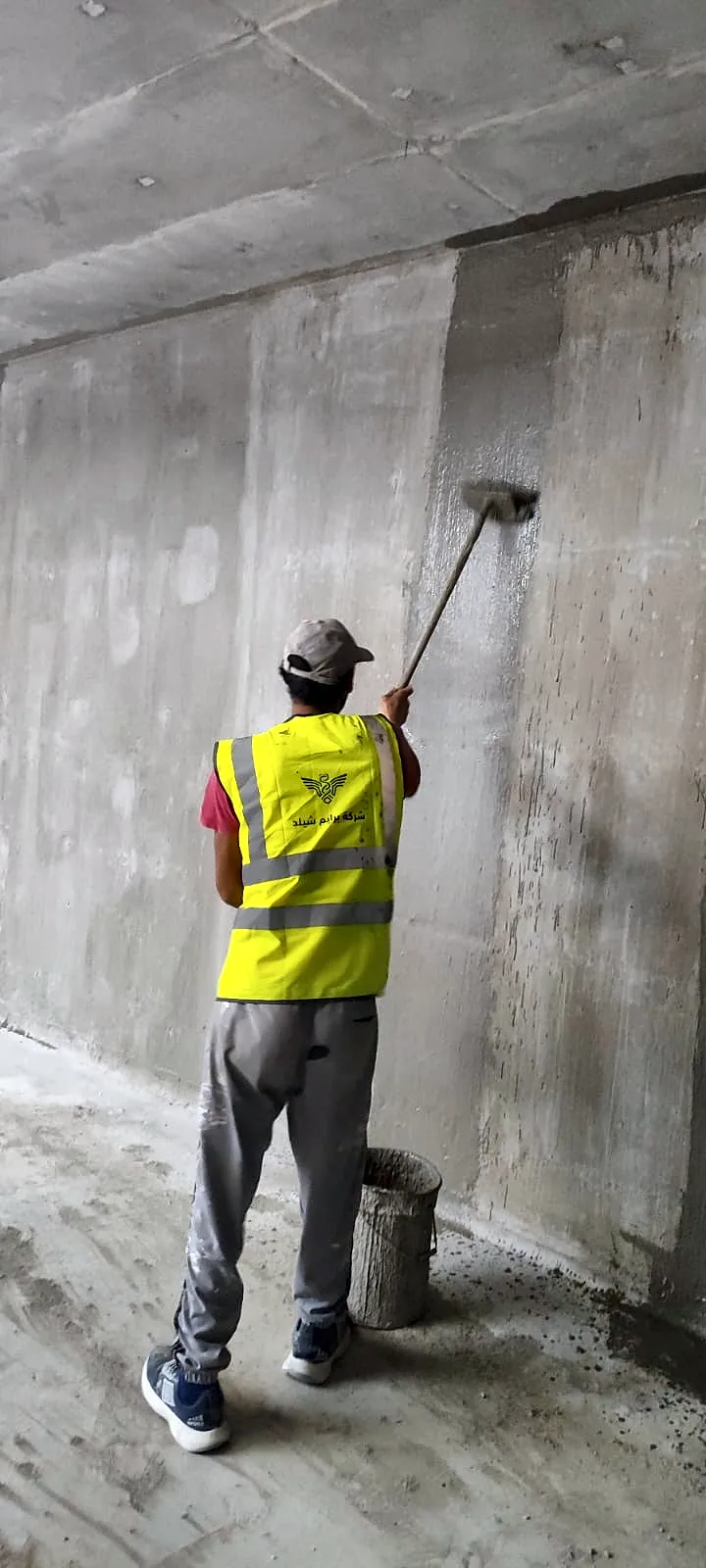
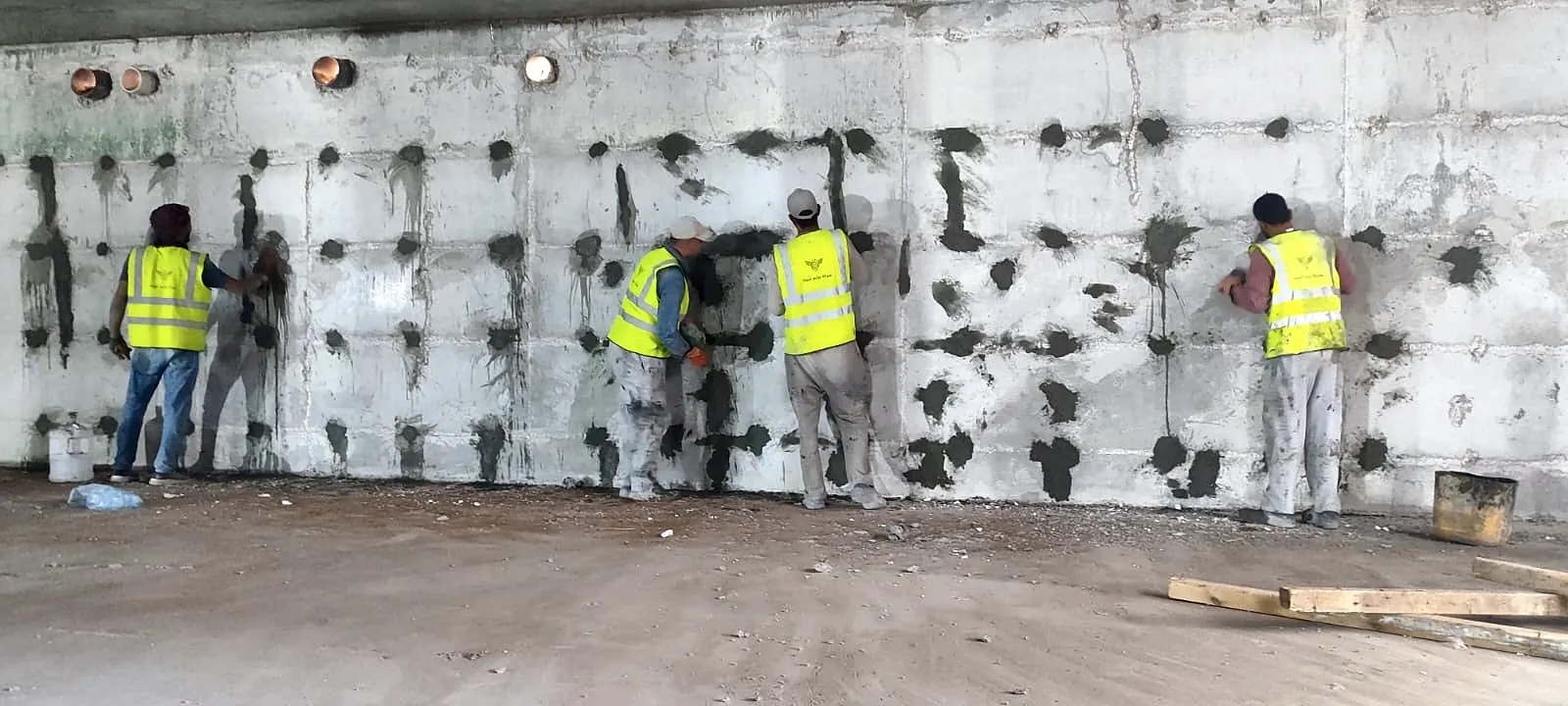
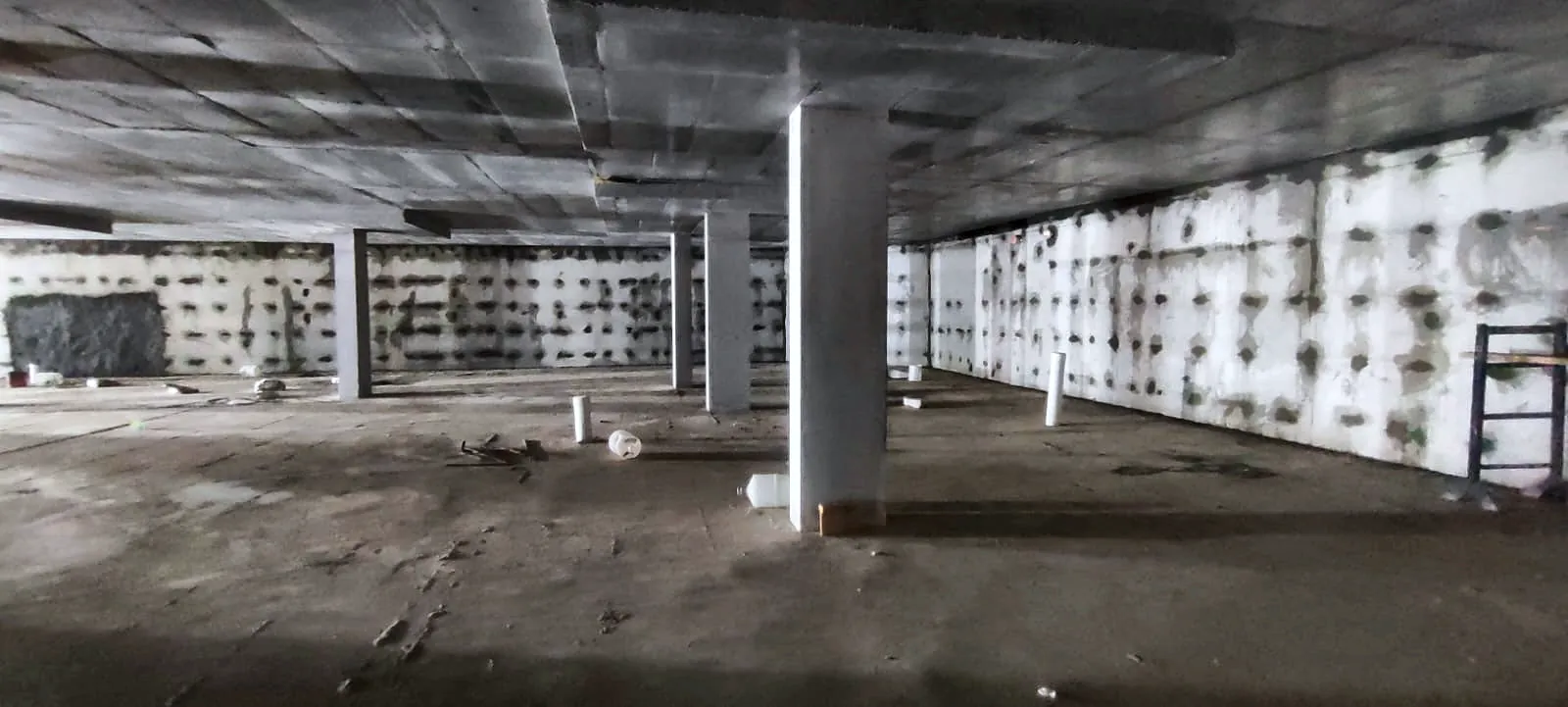
Executed references
From our projects
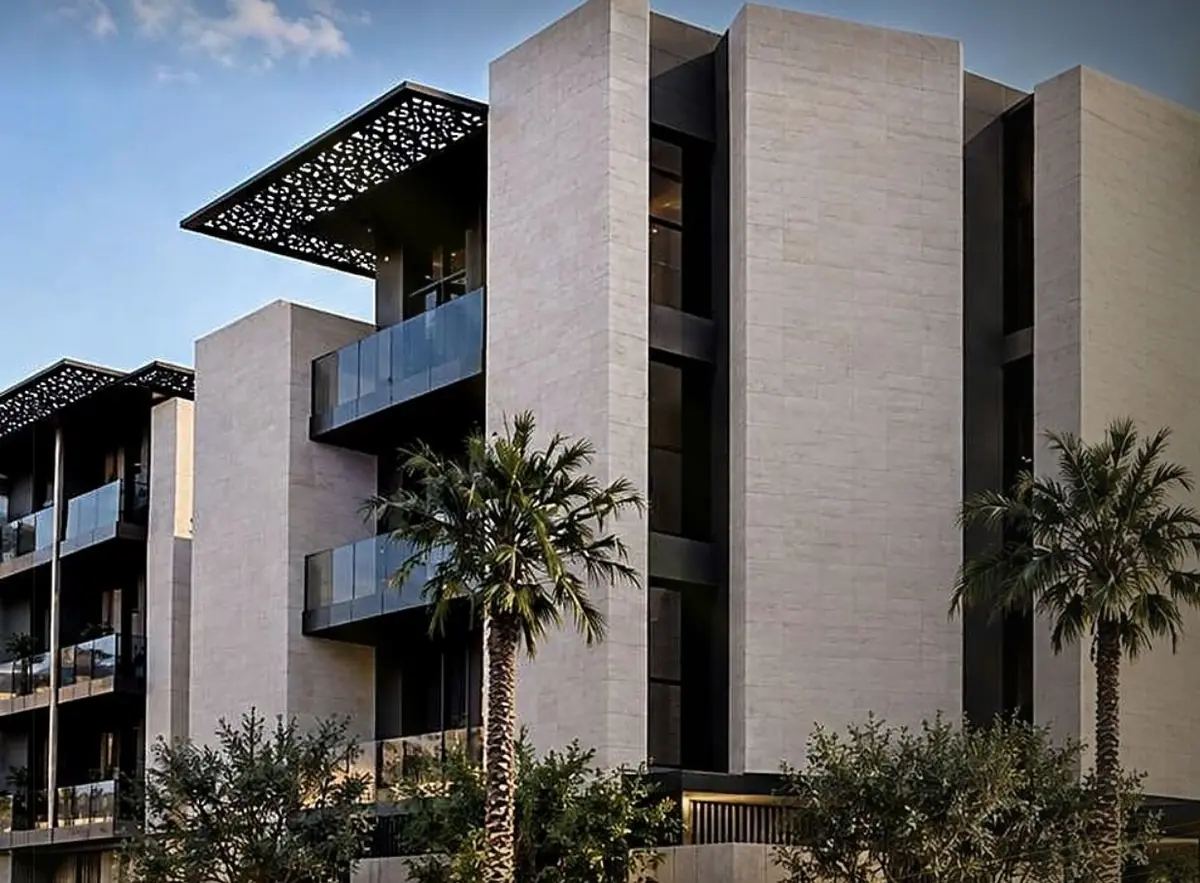 Residential development
Dyari Signature
Al-Munsiyah, Riyadh
Masheed projects
Riyadh Region
Wahla projects
Al-Narjis and Dirab, Riyadh Region
RESI residential projects
Al-Narjis, Al-Rabi, Al-Taawun, Hittin, Riyadh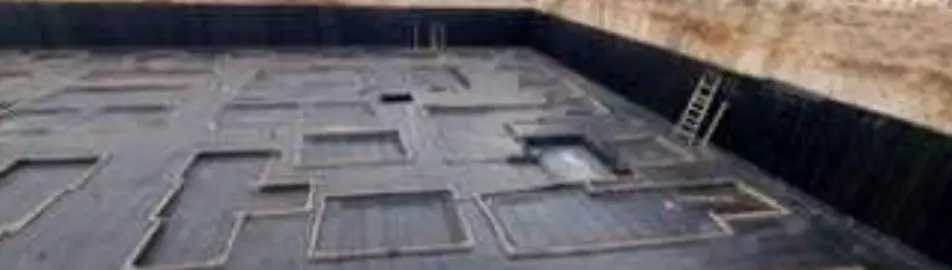
Jala Al-Malqa
Al-Malqa, Riyadh
Etlal 101
Al-Arid, Riyadh


Go deeper
Technical references
- Packer
- Crack
- Injected resin
- Surface seal
Before you ask
Questions
What is carbonation, and why does it matter?
Carbonation is carbon dioxide reacting with the concrete; it lowers the alkalinity that protects the reinforcement and leaves the steel open to rust. An anti-carbonation coating limits how much gas and moisture get in.
Does injection stop water leaking through cracks?
Yes, with the right material: polyurethane is usually used to stop leaks and epoxy to restore structural bond; the choice is made after inspection.
How far is damaged concrete broken out?
Until sound concrete is reached, and behind corroded bars so the mortar surrounds them. The limits of each area are marked before work and agreed on site.
Why does reinforcement rust and the concrete spall?
When concrete loses its alkalinity through carbonation, or chlorides and moisture reach the steel, the bars start to rust; rust expands, cracks the cover and pushes it off. The fix: break out the damaged concrete, clean and protect the bars, rebuild the section with repair mortar, then apply a protective coating.
When do cracks need a structural engineer?
When cracks are wide or growing, run diagonally in beams, columns or load-bearing walls, or come with deflection, crushing or bars that have lost section. A structural assessment comes first, and the repair follows its design.
What is BS EN 1504?
A European series for products and systems that protect and repair concrete structures: Part 9 sets the principles and methods, Part 2 covers surface protection, Part 3 repair mortars, Part 5 injection and Part 10 site application and quality control.
Next step
Cracks, spalling or rust in your concrete?
Send photos of the damage and where it is so we can define the repair, or book an inspection to map it before pricing.