


▽ +06.00Protection solutions · Flooring
Epoxy, car-park and microcement floors
A floor is chosen from its use — vehicles and forklifts, cleaning, slip, moisture in the slab — and its quality starts with preparing the concrete before the first coat.

Engineering view
What are flooring systems?
Resin and cementitious floor systems are thin layers bonded to a concrete slab. They give the floor what bare concrete lacks: a sealed, seamless, easy-to-clean surface that resists abrasion, oils and many chemicals, with colour, marking and slip resistance where needed.
Because the system is thin, it depends on the slab — its strength, moisture, cracks and joints. Most defects, from blistering to peeling and cracking, start below the coating, so preparation and moisture checks come first.

14,800+ m²
approx. at the Al Rajhi Headquarters: epoxy floors with traffic lanes, tank linings and joints (completed and handed over)
Project record · Prequalification 2026
Problems it solves
What goes wrong
Blistering and peeling
Moisture or vapour pressure in the slab, or a surface that was not mechanically prepared before priming.
Worn traffic lanes
A coating too thin for its traffic, especially where vehicles turn and brake.
Slippery ramps and wet zones
A smooth, glossy finish where the design needed a textured, anti-slip surface.
Cracks reflecting through
Slab cracks and joints coated over instead of treated first.
Yellowing and chalking
Epoxy used outdoors or in the sun without a UV-resistant top coat.
Diagnose by symptom
The result
Key benefits
A seamless surface that is easy to clean
Resistance to abrasion, oils and many chemicals
Clear marking and lanes, and slip resistance where needed
A protected slab: dust-free and sealed against spills
By use
Floors by use
- F.01
Warehouses and facilities
Roller-applied epoxy coats, or thicker self-levelling systems for heavier traffic and smoother floors.
Systems Epoxy flooring
- F.02
Self-levelling epoxy
Poured and spread to a controlled thickness for a smooth, seamless floor.
Systems Epoxy flooring
- F.03
Car-park decks
Wear-resistant coatings for internal decks; the exposed top deck needs a flexible, UV-resistant waterproofing system.
Systems Car-park coatings
Parking & traffic areas - F.04
Ramps and anti-slip surfaces
Textured top coats with anti-slip aggregate where the design calls for it.
Systems Car-park coatings
- F.05
Line marking and numbering
Bays, lanes, arrows and numbers in paints made for vehicle traffic.
Systems Car-park coatings
- F.06
Microcement
Thin, hand-trowelled coats for floors and walls with a seamless look — over waterproofing in wet areas.
Systems Microcement
Fit-out & finishing
By technology
Floor systems
- FlooringEpoxy flooringRoller-applied or self-levelling epoxy floors: seamless and easy to clean, for factories, warehouses and facilities.
- FlooringCar-park coatings & line markingCar-park floor coatings built for tyres and abrasion, with bay lines, numbers and arrows.
- FlooringMicrocementThin, hand-trowelled cementitious coats for floors and walls, with a seamless look.

How the system is chosen
| Situation | Suitable systems | Why |
|---|---|---|
| A warehouse, factory or service area | Epoxy flooring | A seamless, hard-wearing, easy-to-clean surface; thickness to suit the traffic. |
| Internal car-park decks | Car-park coatings | A wear-resistant system with marking and anti-slip zones. |
| An exposed top deck or a podium over occupied space | Polyurea Parking & traffic areas | It needs flexible, UV-resistant waterproofing, not a hard floor coating. |
| A showroom, office or home interior | Microcement Epoxy flooring | A seamless finish for floors and walls in one look. |
| Bathrooms and wet areas | Microcement Bathrooms & wet areas | Microcement over a waterproofing system, never instead of it. |
A starting point only: the final system follows the inspection, the approved specification and the product TDS.
Brand-neutral
Manufacturers & approvals
- Fosroc (Saint-Gobain)Approved applicatorCertificate
We start from the engineering of the system, then the product. Manufacturers appear here only with their documented relationship; this does not imply a commercial partnership.
Before work starts
Surface preparation
- A slab of adequate strength and fully cured, with laitance removed by grinding or shot-blasting.
- Slab moisture measured and within the product limit — for example by ASTM F2170 or ASTM D4263, where the specification names them.
- Cracks and joints treated, with movement joints carried through the coating.
- Oils, contaminants and old coatings removed.
- Room temperature and humidity within the product limits during application and cure.
Sequence
Installation process
Assess the slab
We check the slab’s condition, cracks and moisture, and choose the system for its use.
Prepare
Grinding, cleaning and crack repair — good adhesion starts here.
Primer and coats
Primer, then the epoxy coats or a self-levelling pour to a controlled thickness.
Marking and numbering
Lanes, bays, arrows and numbers drawn with a marking machine, in paints made for vehicle traffic.
Check and hand over
Thickness checks and, where required, adhesion tests; handover once the system has cured.
Inspection & testing
QA/QC
- Surface profile and cleanliness accepted before priming.
- Slab moisture recorded before coating.
- Coverage rate and wet-film thickness checked during application.
- Dry-film thickness measured, and pull-off adhesion tested where the specification requires it.
- Curing time respected before the floor opens to traffic.
QA/QC checklistsResin flooring and microcement
What we avoid
Common failures
Coating a damp slab
Blisters and debonding weeks or months later.
Skipping mechanical preparation
Coating applied over laitance peels off with it.
Covering movement joints
The slab’s movement passes into the coating, which cracks over the joint.
A glossy finish on ramps
A slip risk for vehicles and pedestrians.
Opening to traffic before full cure
Tyre marks and early wear.
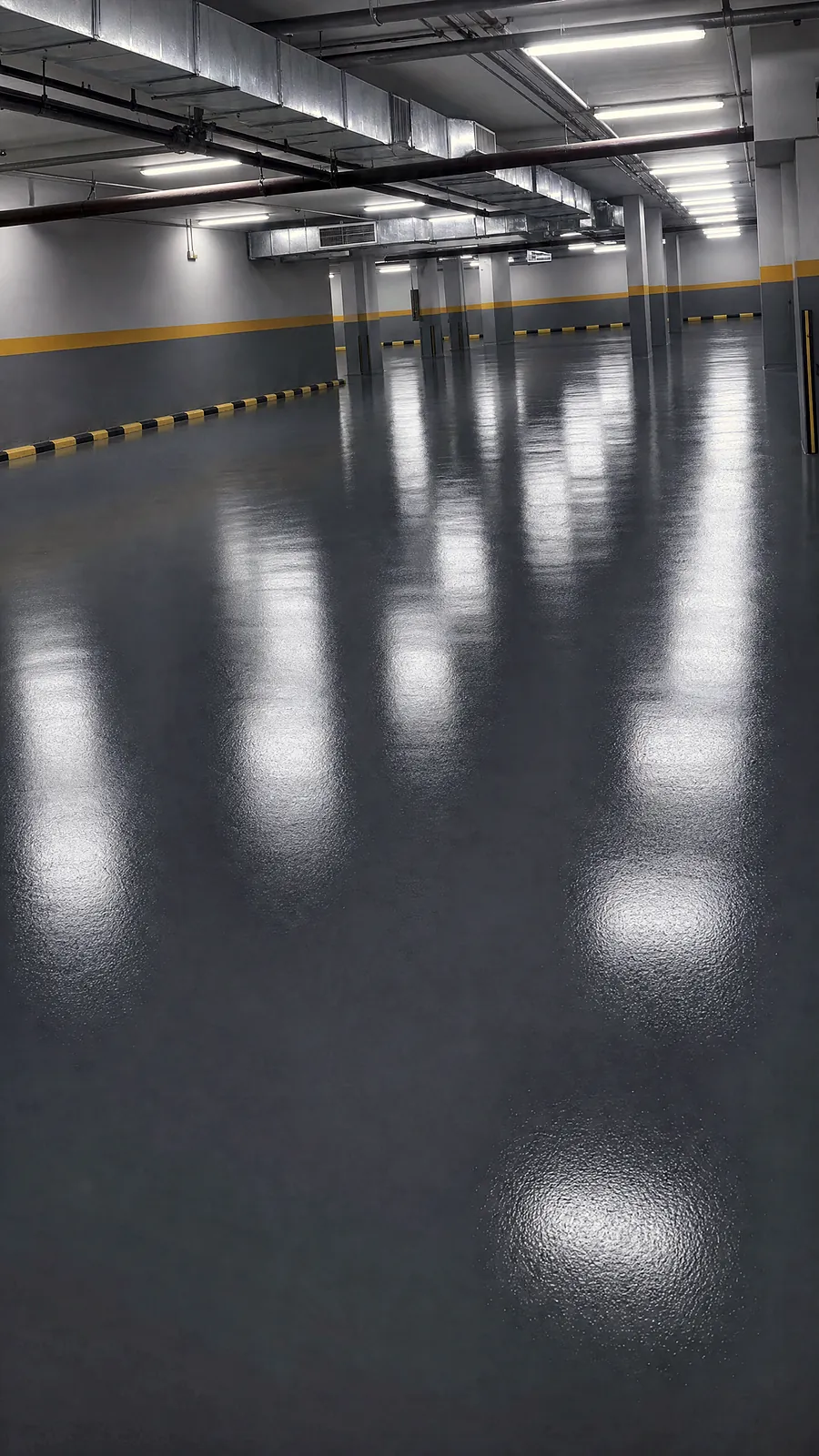
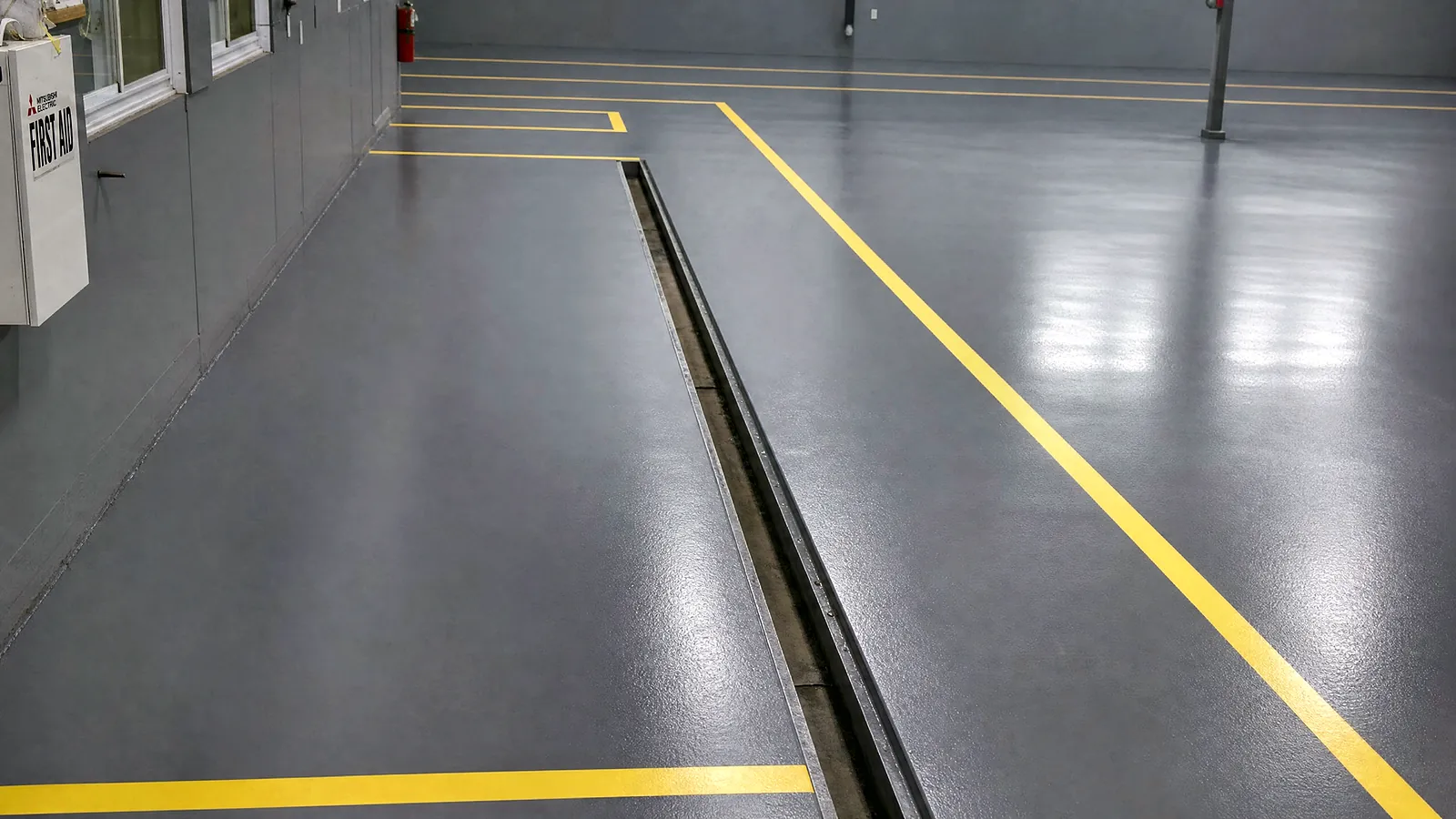
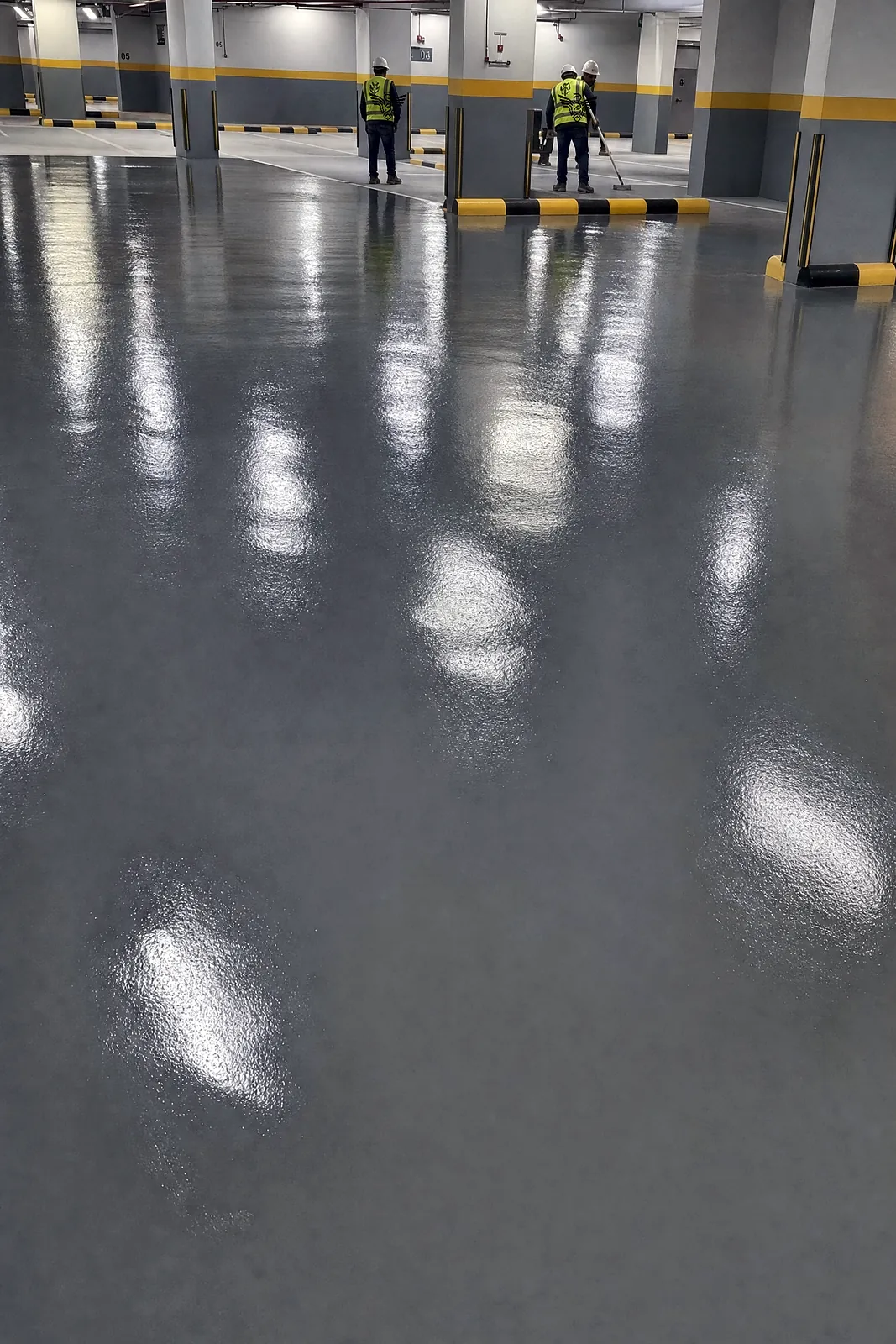
Real photos from our projects
On site
Executed references
From our projects
 Hotel & resort
InterContinental Abha
Abha, Asir Region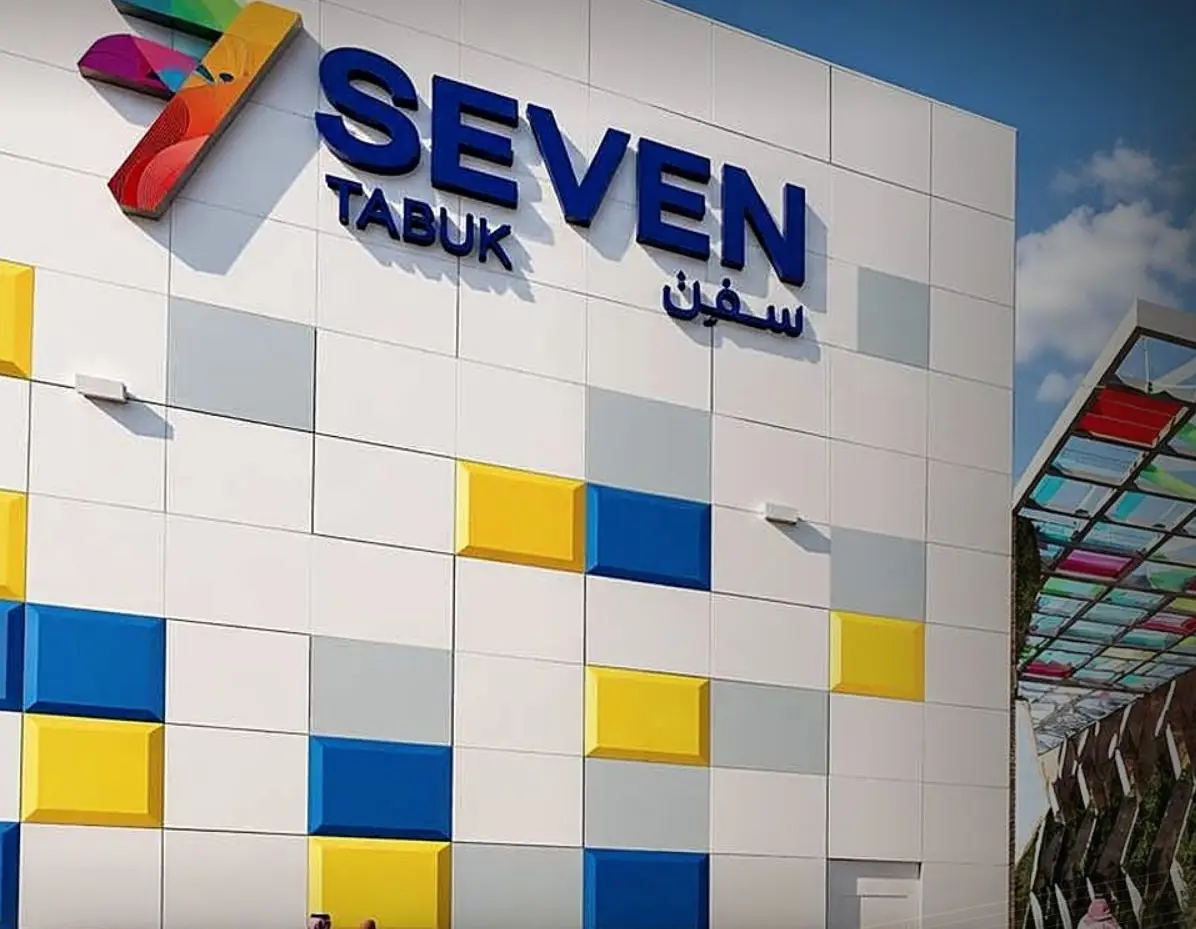 Entertainment & retail complex
SEVEN Tabuk
Tabuk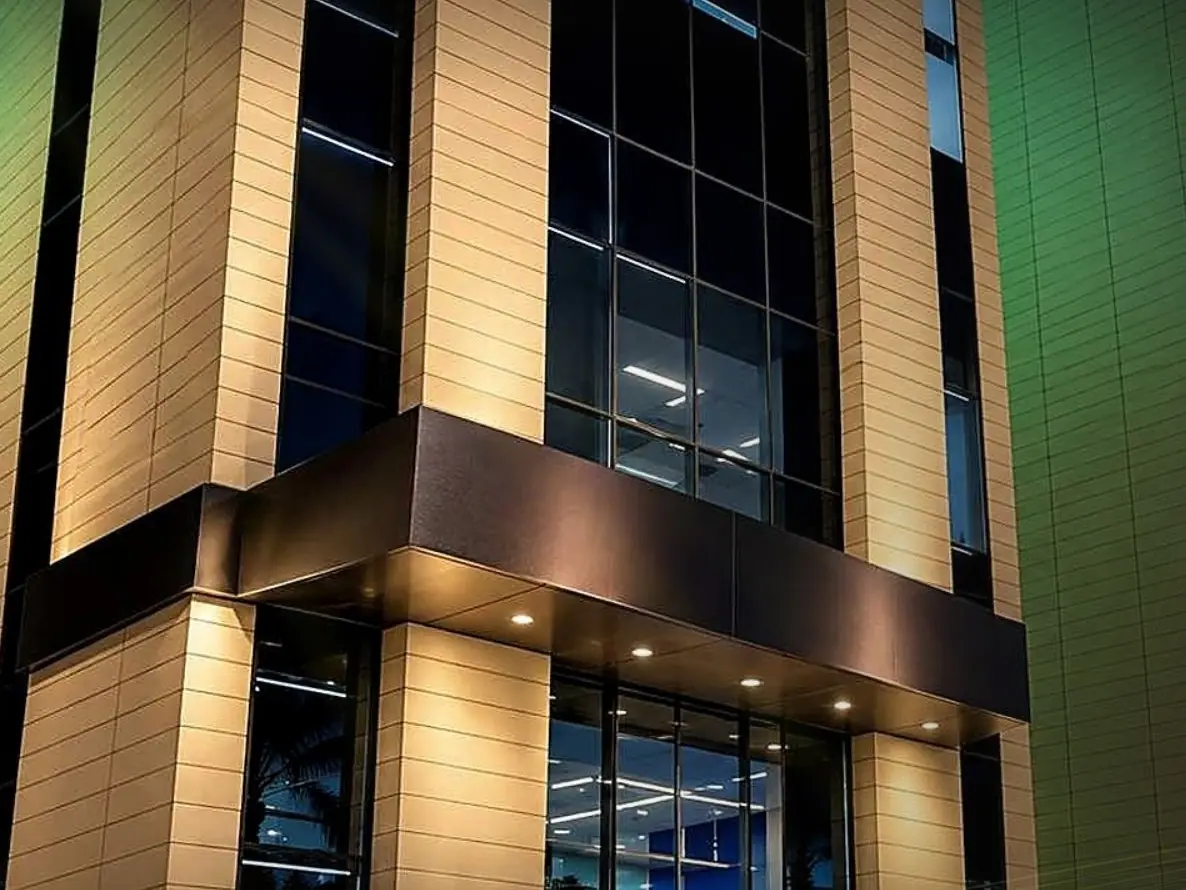 Headquarters
Al Rajhi Headquarters
Al-Ghadeer, Riyadh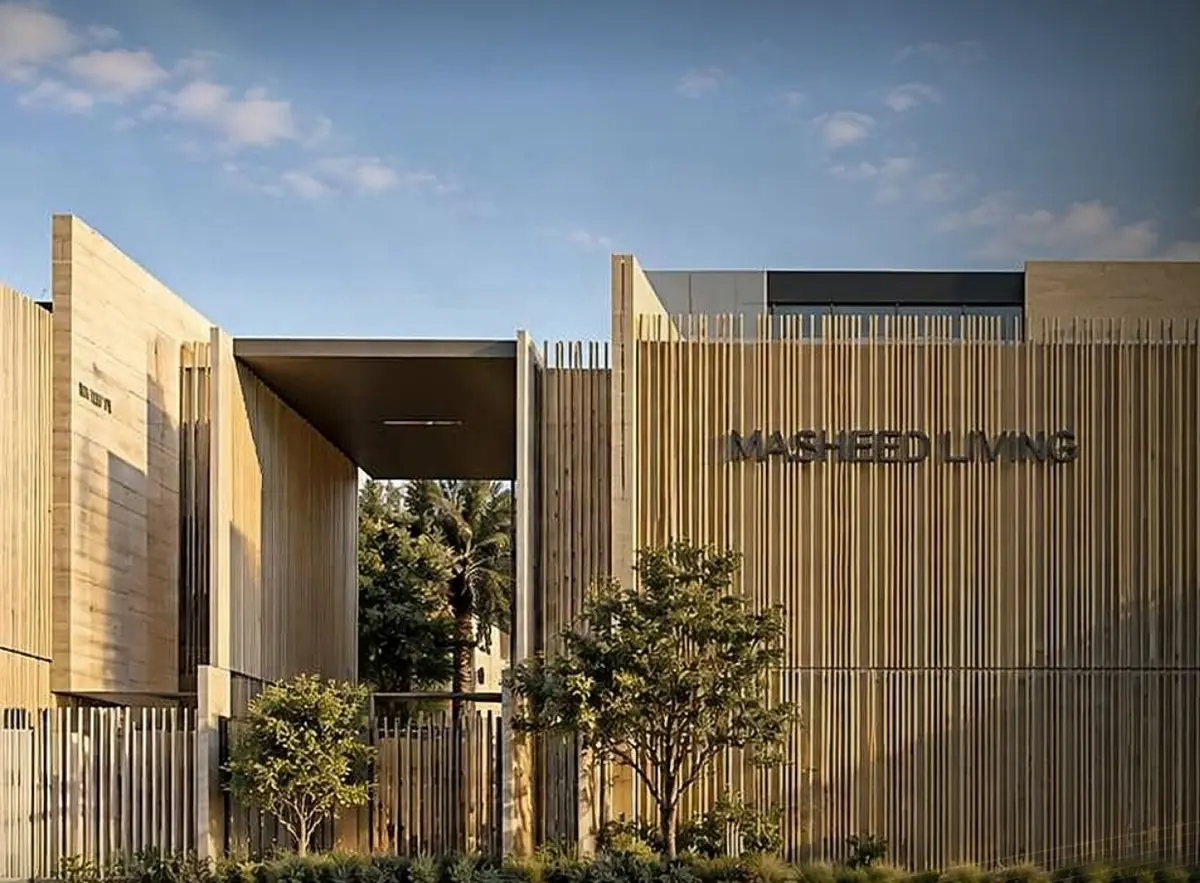
Masheed projects
Riyadh Region
Wahla projects
Al-Narjis and Dirab, Riyadh Region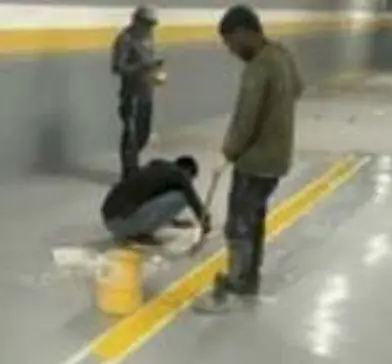
Etlal 101
Al-Arid, Riyadh


Go deeper
Technical references
Before you ask
Questions
What is the difference between coated and self-levelling epoxy?
Coated epoxy is rolled on over a primer; self-levelling epoxy is poured and spread thicker, for a smooth, seamless finish. The choice depends on the use and the floor’s condition.
When can the floor be used after installation?
Once the system has cured, per the product instructions and the temperature; we set the date in the work programme.
Is line marking included?
Our offer can include marking, numbering, arrows and traffic lanes, as at SEVEN Tabuk and the Al Rajhi Headquarters.
What is the difference between epoxy and polyurethane floors?
Epoxy is hard, bonds strongly and resists chemicals, but can yellow in sunlight. Polyurethane is more flexible and colour-stable, so it is often used as a top coat over epoxy or where there is thermal shock.
Are epoxy floors suitable for villas and homes?
Yes for garages, stores and service areas. In living spaces it is a design choice — a seamless, easy-clean surface, with slip and scratching to consider; microcement is an alternative with a different look.
Which floor suits warehouses and factories?
It depends on the traffic (forklifts), chemicals, cleaning method and slip resistance — usually self-levelling epoxy or heavier systems, with the joints treated and line marking and numbering.
Next step
A warehouse or car-park floor?
Send the area, the use and photos of the floor for a detailed offer, or book an inspection of the slab and its moisture.