


▽ +09.00Waterproofing · Parking & traffic
Parking deck waterproofing & protection
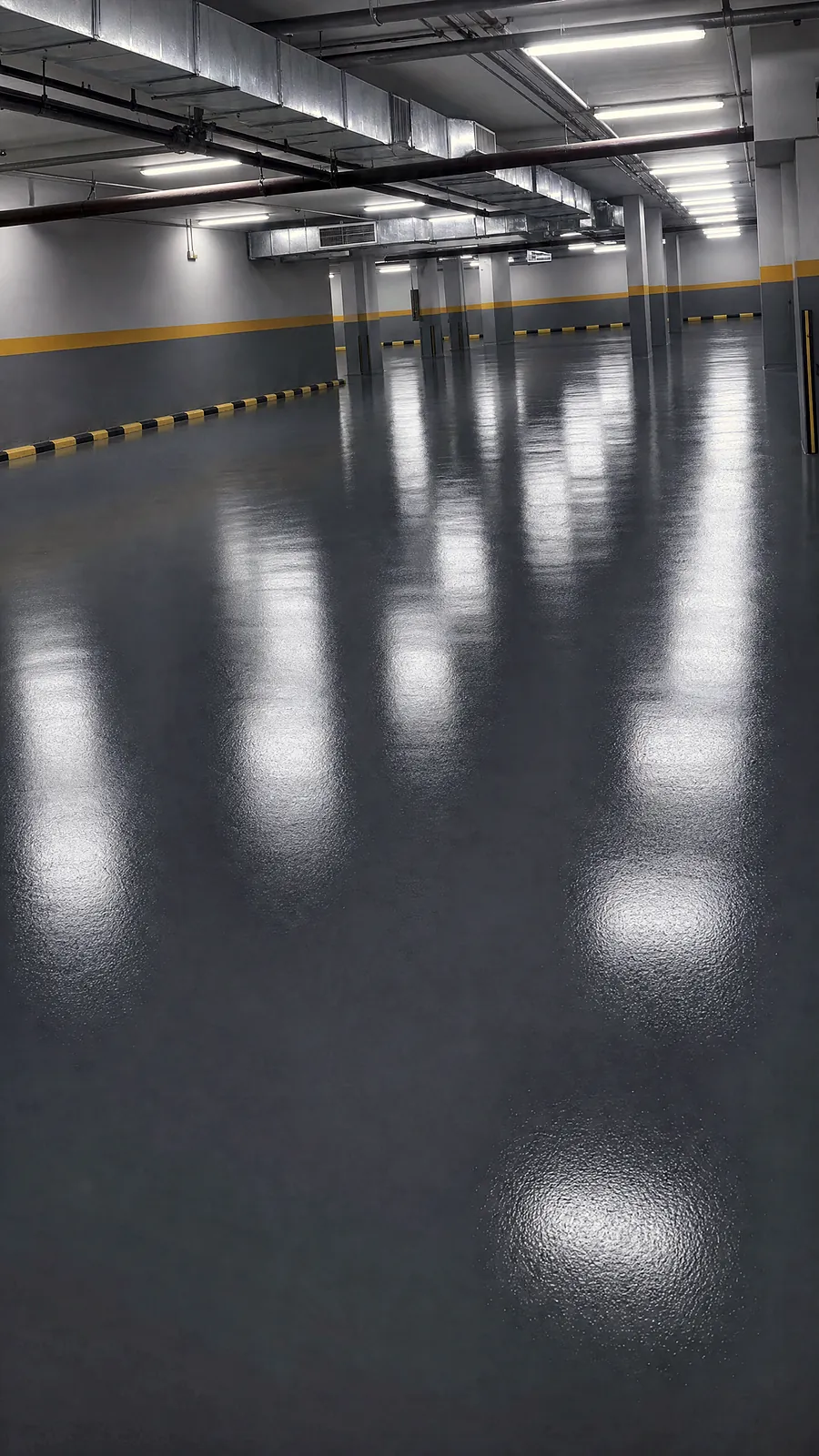
Car parks combine traffic, abrasion, water and exhaust. Protection here is waterproofing, flooring, joints and anti-carbonation working as one.

Engineering view
What is car-park waterproofing and protection?
A parking deck takes traffic, braking and turning, rain or wash-down water, and exhaust that raises the carbonation risk for concrete and reinforcement. When the deck sits over occupied space, any leak becomes a double problem.
The answer is an integrated system: a layer that resists traffic and abrasion, expansion joints that take the structure’s movement, carbonation protection for the soffits below, then line marking and numbering.
Problems it solves
What goes wrong
Leaks through the deck
Rain and wash-down water reach the space below through cracks and joints.
Wear and peeling
Traffic, turning and braking wear out coatings not built for them.
Carbonation and corrosion
Exhaust and moisture reduce the concrete’s protection of the steel; rust and spalling appear on soffits.
Joint failure
A rigid filler or a coating over the joint cracks as the structure moves.
Diagnose by symptom
From the system’s documented advantages
Key benefits
Slip resistance where it is needed
Protects the slab from water and chlorides
A bright, clean, readable car park
Documented advantages of Car-park coatings & line marking — every system also has limits, listed on its page.
Applications
Where it applies
- P.01
Parking decks
Internal and basement parking levels.
- P.02
Ramps
The highest wear: an anti-slip wearing layer.
- P.03
Podiums
Parking decks over occupied space.
- P.04
Exposed parking
The top level under sun and rain.
By technology
Available systems
- Liquid-applied & liningsPolyurea waterproofing (hot & cold)A fast-curing, tough polyurea layer, hot-sprayed with dedicated equipment or cold-applied.
- Joint systemsExpansion joint systemsElastomeric sealants, tapes and cover profiles that let the building move while keeping the joint watertight.
- Concrete repair & protectionConcrete repair with repair mortarsBreaking out damaged concrete, treating the reinforcement and rebuilding the section with a suitable repair mortar.
- Concrete repair & protectionAnti-carbonation coatingsA coating that restricts carbon dioxide entering concrete, slowing carbonation and rebar corrosion.
- FlooringCar-park coatings & line markingCar-park floor coatings built for tyres and abrasion, with bay lines, numbers and arrows.


How the system is chosen
| Situation | Suitable systems | Why |
|---|---|---|
| A deck over occupied space, or exposed | Polyurea | A fast-curing membrane that takes traffic, per the system. |
| Internal parking levels | Car-park coatings | Wear-resistant coats with line marking and numbering. |
| Structural joints | Expansion joints | Take the movement without leaking. |
| Soffits and exposed concrete | Anti-carbonation Concrete repair | Protects the reinforcement from carbonation. |
A starting point only: the final system follows the inspection, the approved specification and the product TDS.
Layers
System build-up
System build-up5 layers
Car-park coatings & line marking
Select a layer to see what it does.
Line marking and bay numbers
Lines, arrows and numbers in paints made for vehicle traffic.
Wearing top coatCore layer
Takes abrasion and tyre wear; with anti-slip aggregate on ramps, as specified.
Base coat
Builds thickness over the primer.
Primer
Consolidates the concrete and bonds the system to it.
Car-park slab
Cracks and joints treated before coating.
A typical build-up for this application, top to bottom.
System page: how it works and its limitsBrand-neutral
Manufacturers & approvals
- Weber (Saint-Gobain)Approved applicatorCertificate
- Fosroc (Saint-Gobain)Approved applicatorCertificate
- DCP SaudiCertified applicatorCertificate
We start from the engineering of the system, then the product. Manufacturers appear here only with their documented relationship; this does not imply a commercial partnership.
Before work starts
Surface preparation
- Mechanical preparation (grinding or shot blasting) to remove laitance.
- Holes and cracks repaired before coating.
- Slab moisture measured before resin systems (ASTM F2170 where needed).
Sequence
Installation process
Prepare and repair
Mechanical preparation and defect repair.
Joints
Expansion joints prepared and treated.
Primer and coats
As the system and traffic zones require.
Marking and numbering
Traffic lanes and bay numbers.
Cure before opening
For the specified time before vehicles drive on.
Inspection & testing
QA/QC
- Mechanical preparation inspected before priming.
- Thickness or coverage of each coat measured.
- Adhesion tested (ASTM D4541) where required.
- Visual check of uniformity and marking lines.
What we avoid
Common failures
Coating over an unprepared slab
Peels under traffic.
Slab moisture
Causes blisters and debonding in epoxy.
Expansion joints coated over
The coating cracks over the joint.
Executed references
From our projects
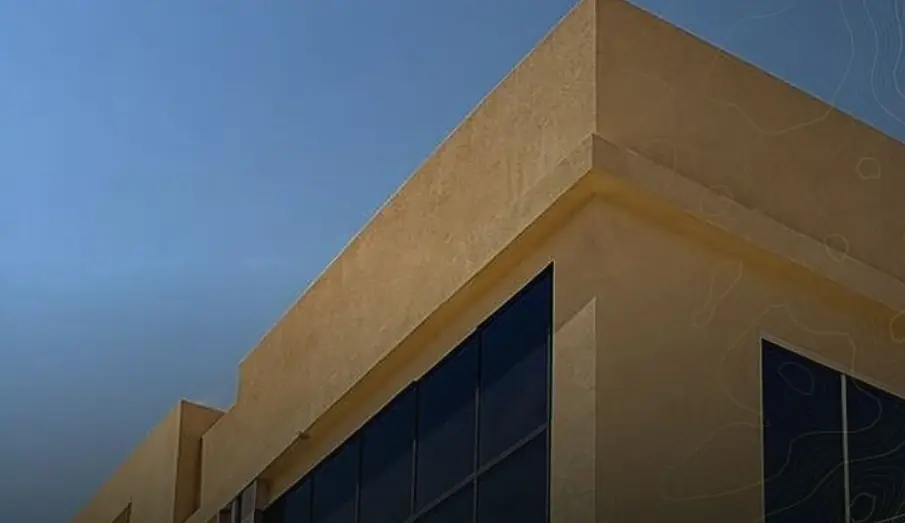
Wahla projects
Al-Narjis and Dirab, Riyadh Region

Go deeper
Technical references
Before you ask
Questions
Why do epoxy floors peel in car parks?
Usually because of poor surface preparation, moisture in the slab, or expansion joints coated over. Mechanical preparation and moisture testing before starting prevent most of these problems.
Do car-park ramps need special treatment?
Yes. Ramps take more abrasion and turning tyres, so they need an anti-slip surface with aggregate built into the coating, and the joints and the junctions with the floors are treated.
Is a car-park floor coating enough as waterproofing?
On internal levels the coating resists abrasion and makes cleaning easy. A top deck or podium over occupied space needs a waterproofing system designed for traffic — or a deck system its data sheet rates as waterproof.
Next step
An exposed deck or a car-park floor?
Send the area, the floor condition and photos for a detailed offer, or ask for an inspection of the slab.