


▽ +09.00Waterproofing · Landscape
Planter & landscape waterproofing
A planter is always wet, and roots look for any weakness. Waterproofing alone is not enough without drainage and root protection.

Engineering view
What is planter and landscape waterproofing?
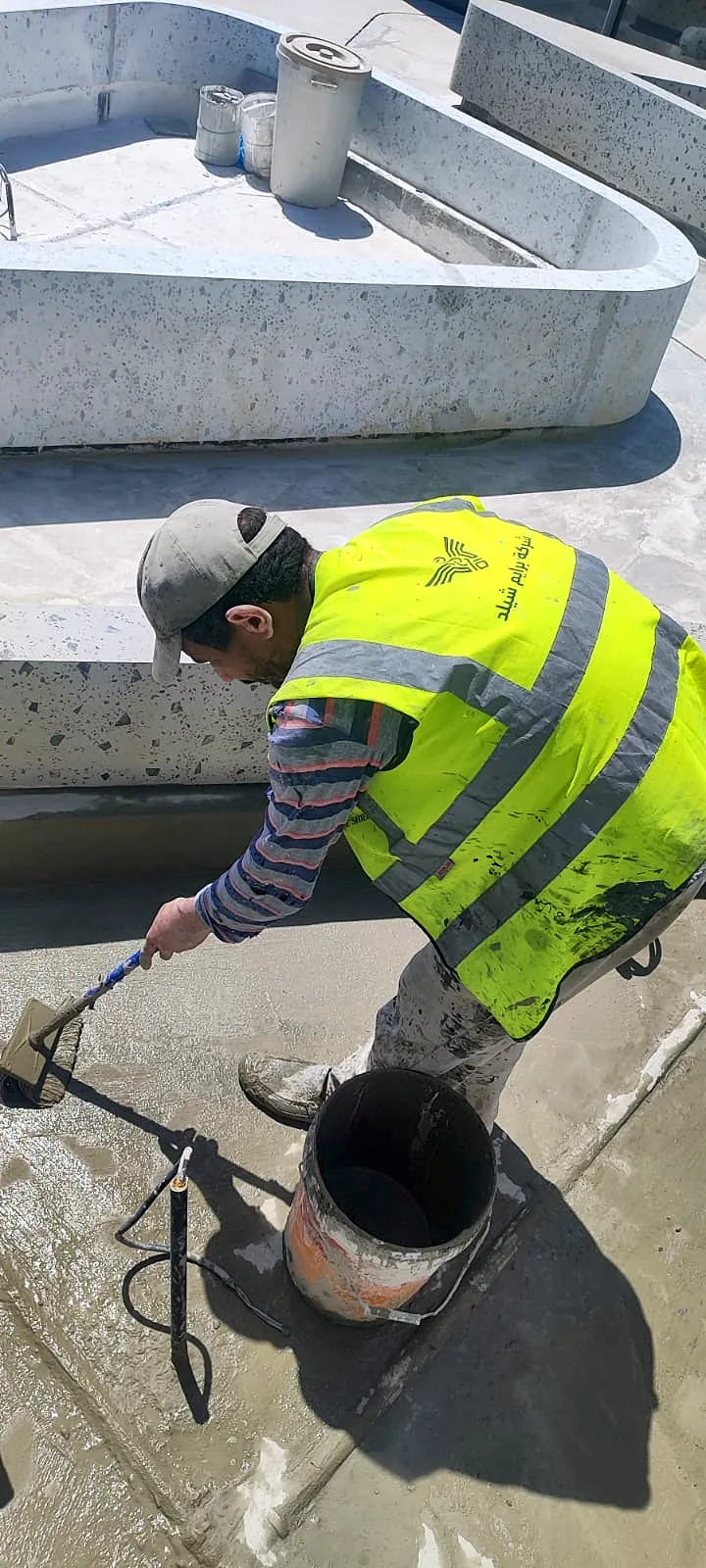
Planters on slabs and roofs stay wet all the time, carry heavy soil, and have roots that grow towards any crack. When they leak, the water reaches an occupied ceiling below — and the repair means emptying the planter.
So the planter is built as a system: a continuous membrane on floor and walls, then a protection board or root barrier, then a drainage layer and a filter fabric that keeps soil out of the drains.
Problems it solves
What goes wrong
Leaks into the space below
A planter over an occupied space leaks through an untreated corner or outlet.
Root penetration
Roots enter any weak point of a membrane without a root barrier.
Waterlogging
Clogged outlets turn the planter into a water tank and load the membrane.
Diagnose by symptom
From the system’s documented advantages
Key benefits
Relieves water pressure on the membrane
Protects against roots, backfill and tools
Keeps planters draining
Documented advantages of Protection & drainage layers — every system also has limits, listed on its page.
Applications
Where it applies
- L.01
Planters
Planters on roofs, podiums and facades.
- L.02
Green-roof areas
Planted areas over a roof, with drainage layers.
- L.03
Landscaping over slabs
Landscaping over car parks and basements; see also podium decks.
By technology
Available systems
- Sheet membranesBituminous membranes (SBS & APP)Modified-bitumen rolls torch-bonded with overlapping laps, for protected roofs, basements and foundations.
- Sheet membranesEPDM membranesA flexible synthetic rubber in large sheets that copes with UV and movement, for exposed and garden roofs.
- Liquid-applied & liningsLiquid polyurethane waterproofingA liquid membrane that cures into a continuous, seamless rubbery layer, strong at details and penetrations.
- Falls, drainage & protectionProtection & drainage layersProtection boards, drainage and filter layers that shield the membrane in planters and buried walls.


How the system is chosen
| Situation | Suitable systems | Why |
|---|---|---|
| A new planter | Bituminous membranes Liquid PU EPDM membranes | A continuous membrane completed by protection and drainage layers. |
| Root protection and drainage | Protection & drainage | Over any membrane. |
A starting point only: the final system follows the inspection, the approved specification and the product TDS.
Layers
System build-up
System build-up6 layers
Protection & drainage layers
Select a layer to see what it does.
Soil or backfill
The load the layers below protect the waterproofing from.
Filter geotextile
Stops fines from clogging the drainage layer.
Drainage layerCore layer
A dimpled drainage board or gravel that relieves water pressure on the waterproofing and leads it to the outlets.
Protection board or root barrierCore layer
Shields the membrane from backfill, compaction and roots.
Waterproofing membrane
The watertight layer; drainage and protection never replace it.
Concrete structure
The planter floor and walls, or the buried wall.
A typical build-up for this application, top to bottom.
System page: how it works and its limitsBrand-neutral
Manufacturers & approvals
- Bitumat / MAPEIApproved applicatorCertificate
- DermabitApproved applicatorCertificate
- AIM IndustriesApproved applicator · Sister companyCertificate
We start from the engineering of the system, then the product. Manufacturers appear here only with their documented relationship; this does not imply a commercial partnership.
Before work starts
Surface preparation
- Planter floor falls towards the outlet.
- Corners coved and penetrations detailed.
- A clean substrate, dry as the system requires.
Sequence
Installation process
Waterproofing
Floor and walls, above the soil level.
Flood test
Before anything covers the membrane.
Protection and root barrier
A protection board over the membrane.
Drainage, filter, then soil
A drainage layer and filter fabric that keep the outlets clear.
Inspection & testing
QA/QC
- Flood test before the protection layers.
- Upturn above the soil level checked.
- Outlets checked and kept accessible.
What we avoid
Common failures
Membrane below the soil line
Water enters over the top of the membrane.
No root barrier
Roots penetrate the membrane in time.
Outlet clogged with soil
The planter turns into a water tank.
Executed references
From our projects

Go deeper
Technical references
Before you ask
Questions
Is one waterproofing layer enough for a planter?
No. A planter needs a continuous membrane, then a protection board or root barrier, then a drainage layer and filter fabric — and a flood test before the soil goes in.
How is a green roof waterproofed?
With a continuous root-resistant membrane, then a protection board, a drainage layer and a filter fabric before the soil, with the waterproofing turned up at the edges and walls above soil level. It is flood-tested before planting, because reaching it afterwards is costly.
Why does the wall next to a planter get damp?
Usually because the waterproofing is not taken high enough above the soil, the planter has no drainage layer so water stays trapped, or roots or tools have damaged the membrane. The fix is re-waterproofing the planter with the full build-up, not painting the wall.
Next step
Planters over occupied space?
Send the planter drawings and the required layers for a detailed offer, or ask for a technical review of the details.